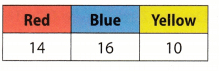
Texas Go Math

Texas Go Math Grade 7 Module 3 Quiz Answer Key

Refer to our Texas Go Math Grade 7 Answer Key Pdf to score good marks in the exams. Test yourself by practicing the problems from Texas Go Math Grade 7 Module 3 Quiz Answer Key.

Texas Go Math Grade 7 Module 3 Quiz Answer Key

Texas Go Math Grade 7 Module 3 Ready to Go On? Answer Key

3.1 Converting Between Measurement Systems

Convert each measurement.

Question 1.
20 gallons ≈ _______ liters
Answer:
1 gallon ≈ 3.79 liters.
Write the conversion factor as a ratio: \(\frac{3.79 \text { liters }}{1 \text { gallon }}\)
20 gallons × \(\frac{3.79 \text { liters }}{1 \text { gallon }}\) ≈ 75.8 liters

Go Math Grade 7 Module 3 Answer Key Question 2.
36ounces ≈ _______ grams
Answer:
1 ounce ≈ 27.4 liters.
Write the conversion factor as a ratio: \(\frac{28.4 \text { grams }}{1 \text { ounce }}\)
36 ounces × \(\frac{28.4 \text { grams }}{1 \text { ounce }}\) ≈ 1022.4 grams

Question 3.
43 yards ≈ ________ meters
Answer:
1 yard ≈ 0.914 liters.
Write the conversion factor as a ratio: \(\frac{0.914 \text { meter }}{1 \text { yard }}\)
43 yard × \(\frac{0.914 \text { meter }}{1 \text { yard }}\) ≈ 39.302 meters

Question 4.
5 miles ≈ _________ kilometers
Answer:
1 mile ≈ 1.61 kilometer.
Write the conversion factor as a ratio: \(\frac{1.61 \text { kilometer }}{1 \text { mile }}\)
5 miles × \(\frac{1.61 \text { kilometer }}{1 \text { mile }}\) ≈ 8.05 kilometers

3.2 Percent Increase and Decrease

Find the percent change from the first value to the second.

Question 5.
36; 63 ____________________
Answer:
Find the amount of change.
Amount of Change = Greater Value – Lesser value
= 63 – 36
= 27
Find the percent increase Round to the nearest percent
Percent Change = \(\frac{\text { Amount of Change }}{\text { Original Amount }}\)
= \(\frac{27}{36}\)
= 0.75
= 75%

Grade 7 Module 3 Answer Key Go Math Question 6.
50; 35 ____________________
Answer:
Find the amount of change.
Amount of Change = Greater Value – Lesser value
= 50 – 35
= 15
Find the percent decrease Round to the nearest percent
Percent Change = \(\frac{\text { Amount of Change }}{\text { Original Amount }}\)
= \(\frac{15}{50}\)
= 0.3
= 30%

Question 7.
40; 72 __________________
Answer:
Find the amount of change.
Amount of Change = Greater Value – Lesser value
= 72 – 40
= 32
Find the percent increase Round to the nearest percent
Percent Change = \(\frac{\text { Amount of Change }}{\text { Original Amount }}\)
= \(\frac{32}{72}\)
= 0.4
= 44%

Question 8.
92; 69 ___________________
Answer:
Find the amount of change.
Amount of Change = Greater Value – Lesser value
= 92 – 69
= 23
Find the percent increase Round to the nearest percent
Percent Change = \(\frac{\text { Amount of Change }}{\text { Original Amount }}\)
= \(\frac{23}{92}\)
= 0.25
= 25%

3.3 Markup and Markdown

Use the original price and the markdown or markup to find the retail price.

Question 9.
Original price: $60; Markup: 15%; Retail price: ___________________
Answer:
Markup = 15% = 0.15
Retail Price = Original cost + Markup
= x + 0.15x
= 1.15x
= 1.15 × $60
= $69

Go Math Module 3 Module 3 Test Answers Question 10.
Original price: $32; Markup: 12.5%; Retail price: ___________________
Answer:
Markup = 12.5% = 0.125
Retail price = Original cost + Markup
= x + 0.125x
= 1.125x
= 1.125 × $32
= $36

Question 11.
Original price: $50; Markdown: 22%; Retail price: __________________
Answer:
Markdown = 22% = 0.22
Retail price =
Original cost Markdown
= x – 0.22x
= 0.78x
= 0.78 × $50
= $39

Question 12.
Original price: $125; Markdown: 30%; Retail price: _________________
Answer:
Markdown = 30% = 0.3
Sale price = Original cost Markdown
= x – 0.3x
= 0.7x
= 0.7 × $125
= $87.5

3.4 Applications of Percent

Question 13.
Mae Ling earns a weekly salary of $325 plus a 6.5% commission on sales at a gift shop. How much would she make in a work week if she sold $4,800 worth of merchandise? __________________________________________
Answer:
The commision is 6.5%.
Mae Ling earns the sum of her weekly salary and the comission of her sales.
Commision: $4,800 × 0.065 = $312
Total salary: $325 + $312 = $637
She would make $637 in a week.

Question 14.
Ramon earns $1,735 each month and pays $53.10 on electricity. To the nearest tenth of a percent, what percent of Ramon’s earnings are spent on electricity each month? ______________________________________
Answer:
We have to divide electricity cost by his salary to calculate the percentage of his salary that is spent on electricity
$53.10 ÷ $1, 375 ≈ 0.039 × 100% = 3.9%
3.9% of Ramon’s earnings are spent on electricity.

Essential Question

Grade 7 Math Module 3 Quiz Answer Key Question 15.
Give three examples of how percents are used in the real world. Tell whether each situation represents a percent increase or a percent decrease.
Answer:
First example:
Discount, markdown, sales. Percent decrease.
Second example:
Companies describe their success or failure as an increase or decrease in profit levels. Percent increase or decrease.
Third example:
Interest Percent increase,

Texas Go Math Grade 7 Module 3 Mixed Review Texas Test Prep Answer Key

Selected Response

Question 1.
Zalmon walks \(\frac{3}{4}\) of a mile in \(\frac{3}{10}\) of an hour. What is his speed in miles per hour?
A. 0.225 miles per hour
B. 2.3 miles per hour
C. 2.5 miles per hour
D. 2.6 miles per hour
Answer:
C. 2.5 miles per hour

Determine the units of the rate.
The rate is the distance in mites per time in hours
Find Julio’s rate of walking in distance walked per time.
Texas Go Math Grade 7 Module 3 Quiz Answer Key 2

Question 2.
Shaylyn measured her house as 5 meters tall. Which of these is an equivalentmeasurement?
A. 0.3 miles
B. 16.4 feet
C. 7.3 yards
D. 27.2 inches
Answer:
B. 16.4 feet

From the given choices. we can rule out A. C. D because we can sec that 5 meters differ from these values in given unit of measure.
Now, we just have to check for B.
1 meter ≈ 3.28 ft
Write the conversion factor as a ratio: \(\frac{3.28 \text { feet }}{1 \text { meter }}\)
5 meters × \(\frac{3.28 \text { feet }}{1 \text { meter }}\) = 16.4 feet

Question 3.
Find the percent change from 70 to 56.
A. 20% decrease
B. 20% decrease
C. 25% increase
D. 25% increase
Answer:
A. 20% decrease

Find the amount of change.
Amount of Change = Greater Value – Lesser value
= 70 – 56
= 14
Find the percent decrease Round to the nearest percent
Percent Change = \(\frac{\text { Amount of Change }}{\text { Original Amount }}\)
= \(\frac{14}{70}\)
= 0.2
= 20%

Go Math Grade 7 Module 3 Answer Key Pdf Question 4.
Delia uses 3.5 skeins of yarn to knit one scarf. How many scarves can she complete if she has 19 skeins of yarn?
A. 4 scarves
B. 5 scarves
C. 6 scarves
D. 7 scarves
Answer:
B. 5 scarves

Let y represent scarves, and x skeins of yarn.
If she need 3.5 skeins of yarn to knit one scarf, then y = \(\frac{x}{3.5}\)
x = 19
y = \(\frac{x}{3.5}\)
y = \(\frac{19}{3.5}\)
y = 5.43
She can make almost 5 and a half scarves, that means she can complete 5 whole scarves.

Question 5.
The rainfall ball two years ago was 10.2 inches. Last year’s total was 20% greater. What was last year’s rainfall total?
A. 8.16 inches
B. 11.22 inches
C. 12.24 inches
D. 20.4 inches
Answer:
C. 12.24 inches

First, find the amount of change.
10.2 × 0.2 = 2.04
Then, find the new amount of rainfall.
New amount = Original amount + Amount of Change
= 10.2 + 2.04
= 12.24
Last year’s rainfall total was 12.24 inches.

Question 6.
A pair of basketball shoes was originally priced at $80 but was marked up by 37.5%. What was the retail price of the shoes?
A. $50
B. $83
C. $110
D. $130
Answer:
C. $110

Markup = 37.5% = 0.375
Retail price = Original cost – Markup
= s + 0.375s
= 1.375s
= 1.375 × $80
= $110

Question 7.
The day after Halloween, candy was marked down 40%. Which expression represents the new retail price?
A. 0.4p
B. 0.6p
C. 1.4p
D. 1.6p
Answer:
B. 0.6p

Markdown = 40% = 0.4
Sale price = Original cost Markdown
= p – 0.4p
= 0.6 p

Math Quiz for Grade 7 Go Math Module 3 Answer Key Question 8.
The sales tax rate in Jan’s town is 7.5%. If she buys 3 lamps for $23.59 each and a sofa for $769.99, how much sales tax does she owe?
A. $58.85
B. $63.06
C. $67.26
D. $71.46
Answer:
B. $63.06

Sales tax rate = 7.5% = 0.075
First, sum up the cost of items, then apply saLes tax rate to see how much sales tax she owes
Sum of items = 3 × $23.59 + $769.99
= $70.77 + $769.99
= $840.76
Sales tax = Sum of items × Sales tax rate
= $840.76 × 0.075
= $63.06

Question 9.
A bank offers an annual simple interest rate of 8% on home improvement loans. How much would Tobias owe if he borrowed $17,000 over a period of 2 years?
A. $1,360
B. $2,720
C. $18.360
D. $19,720
Answer:
B. $2,720

Find the amount of interest earned in one year. Then calculate the amount of interest for 2 years.
Interest Rate × Initial loan = Interest for 1 year
0.08 × $17000 = $1360
Interest for 1 year × 2 years = Interest for 2 years
$1360 × 2 = $2720
Tobias would owe $2720.

Gridded Response

Module 3 Answer Key Grade 7 Quiz Answers Question 10.
The granola Summer buys used to cost $6.00 per pound, but it has been marked up by 15%. How much in dollars and cents will Summer pay for 2.6 pounds of granola at the new price?
Texas Go Math Grade 7 Module 3 Quiz Answer Key 1
Answer:
Initial, cost of granoLa per pound = $6.00
Percentage increase in the cost of granola = 15%
New cost of granoLa per pound = 6 × (1 + \(\frac{15}{100}\))
= 6 × 1.15
= $6.9
So, the cost of 2.6 pounds of granola = 2.6 × 6.9
= $17.94
hence, the cost of 2.6 pounds of granola is $17.94
The table will be made as per the below instructions:
1st column: mark + sign
2nd column: mark 0
3rd column: mark 0
4th column: mark 1
5th column: mark 7
6th column: mark 9
7th column: mark 4

Texas Go Math Grade 7 Module 3 Quiz Answer Key Read More »
Texas Go Math Grade 7 Lesson 6.2 Answer Key Theoretical Probability of Compound Events

Refer to our Texas Go Math Grade 7 Answer Key Pdf to score good marks in the exams. Test yourself by practicing the problems from Texas Go Math Grade 7 Lesson 6.2 Answer Key Theoretical Probability of Compound Events.

Texas Go Math Grade 7 Lesson 6.2 Answer Key Theoretical Probability of Compound Events

Texas Go Math Grade 7 Lesson 6.2 Explore Activity Answer Key

Finding Probability Using a Table

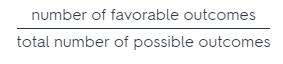
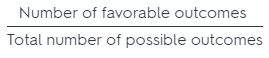
Recall that a compound event consists of two or more simple events. To find the probability of a compound event, you write a ratio of the number of ways the compound event can happen to the total number of equally likely possible outcomes.
Texas Go Math Grade 7 Lesson 6.2 Answer Key 1
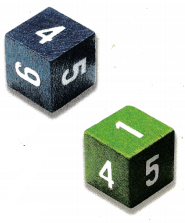
Jacob rolls two fair number cubes. Find the probability that the numbers he rolls is 8.
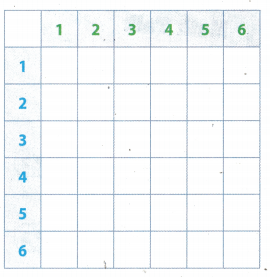
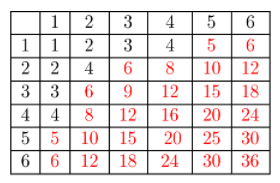
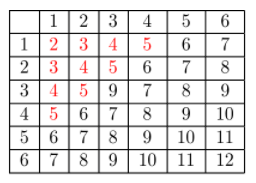
STEP 1: Use the table to find the sample space for rolling a particular sum on two number cubes. Each cell is the sum of the first number in that row and column.
Texas Go Math Grade 7 Lesson 6.2 Answer Key 2
STEP 2: How many possible outcomes are in the sample space?
STEP 3: Circle the outcomes that give the sum of 8. ________
STEP 4: How many ways are there to roll a sum of 8? ________
STEP 5: What is the probability of rolling a sum of 8? ________

Reflect

Question 1.
Give an example of an event that is more likely than rolling a sum of 8.
Answer:
P (rolling a sum of 8) = \(\frac{5}{36}\) = \(\frac{5}{36}\)
Rolling a sum of 7 is an example of an event that is more likely than rolling a sum of 8.
There are six ways to roll a sum of 7.
P (rolling a sum of 7) = \(\frac{6}{36}\) = \(\frac{1}{6}\).

Practice and Homework Lesson 6.2 Answer Key Question 2.
Give an example of an event that is less likely than rolling a sum of 8.
Answer:
5 5
P (rolling a sum of 8) = \(\frac{5}{36}\) = \(\frac{5}{36}\)
Rolling a sum of 2 is an example of an event that is less likely than rolling a sum of 8.
The only way to roll a sum of 2 is to roll 1 on each cube and the probability for that is:
P (rolling a sum of 2) = \(\frac{1}{36}\) = \(\frac{1}{36}\)

Example 1

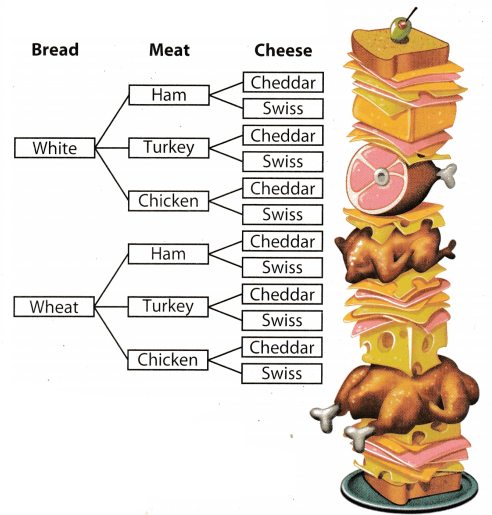
A deli prepares sandwiches with one type of bread (white or wheat), one type of meat (ham, turkey, or chicken), and one type of cheese (cheddar or Swiss). Each combination is equally likely. Find the probability of choosing a sandwich at random and getting turkey and Swiss on wheat bread.
STEP 1: Make a tree diagram to find the sample space for the compound event.
Texas Go Math Grade 7 Lesson 6.2 Answer Key 3
STEP 2: Find the number of possible outcomes in the sample space: 12
STEP 3: Find the probability of getting turkey and Swiss on wheat bread at random: \(\frac{1}{12}\)

Your Turn

Use the diagram from Example 1 to find the given probabilities.

Question 3.
P(ham sandwich) _________________________
Answer:
We have two types of bread for sandwiches, and three type of meat, so total number of possible outcomes is 6. Number of favorable outcomes is 2 because we can prepare ham sandwich with one of two types of bread
P (ham sandwich) = \(\frac{2}{6}\) = \(\frac{1}{3}\)

Probability of Compound Events Answer Key Question 4.
P(sandwich containing Swiss cheese) ______________
Answer:
We have two types of bread for sandwiches, three types of meat and two types of cheese, so total number of possible outcomes is 12. Number of favorable outcomes is 6 because we can prepare a sandwich with Swiss cheese in 6 ways .
P (sandwich containing Swiss cheese) = \(\frac{6}{12}\) = \(\frac{1}{2}\)

Question 5.
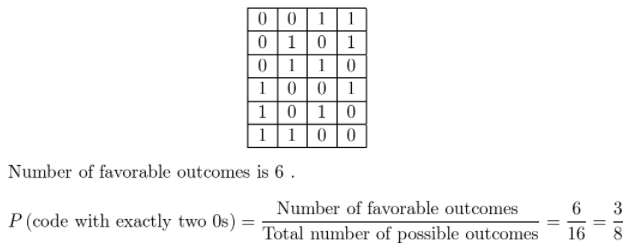
Martha types a 4-digit code into a keypad to unlock her car doors. The code uses the numbers 1 and 0. If the digits are selected at random, what is the probability of getting a code with exactly two 0s?
Answer:
Let symbols A. B. C, D represent:
A = For first digit in code we have two opportunities: 0 and 1;
B = For second digit in code we have two opportunities: 0 and 1;
C = For third digit in code we have two opportunities: 0 and 1;
D = For forth digit in code we have two opportunities: 0 and 1.
Total number of possible outcomes is:
A ∙ B ∙ C ∙ D = 2 ∙ 2 ∙ 2 ∙ 2 = 16
For favorable outcomes:

Texas Go Math Grade 7 Lesson 6.2 Answer Key 10

Texas Go Math Grade 7 Lesson 6.2 Guided Practice Answer Key

Drake rolls two fair number cubes. (Explore Activity)
Texas Go Math Grade 7 Lesson 6.2 Answer Key 4

Question 1.
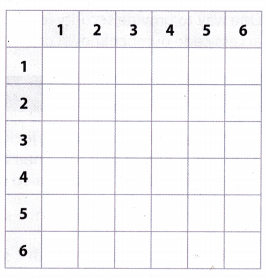
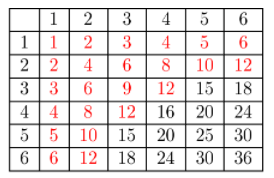
Complete the table to find the sample space for rolling a particular product on two number cubes.
Answer:
Each cell is the product of the first number in that row and column.
Texas Go Math Grade 7 Lesson 6.2 Answer Key 11

Question 2.
What is the probability that the product of the two numbers Drake rolls is a multiple of 4?
Answer:
Texas Go Math Grade 7 Lesson 6.2 Answer Key 12
Count how many numbers in the table are greater than 4.
The probability that the product of two numbers Drake rolls is a multiple of 4 is a number of the product of two numbers that is greater than 4 divided by total number of possible outcomes:
\(\frac{28}{36} \frac{: 4}{: 4} \frac{7}{9}\)
The probability that the product of two numbers Drake rolls is a multiple of 4 is \(\frac{7}{9}\).

Practice and Homework Lesson 6.2 Theoretical Probability Answer Key Question 3.
What is the probability that the product of the two numbers Drake rolls is less than 13?
Answer:
Texas Go Math Grade 7 Lesson 6.2 Answer Key 13
Count how many numbers in the table are less than 13.
The probability that the product of two numbers Drake rolls is less than 13 is number of the the product of two numbers that is less than 13 divided by total number of possible outcomes:
\(\frac{23}{36}\)
The probability that the product of two numbers Drake rolls is less than 13 is \(\frac{23}{36}\).

You flip three coins and want to explore the probabilities of certain events. (Examples 1 and 2)

Question 4.
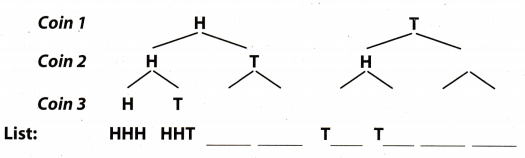
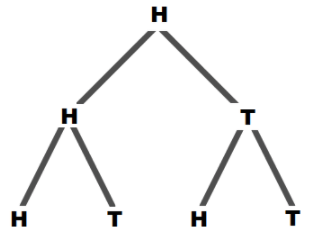
Complete the tree diagram and make a list to find the sample space.
Texas Go Math Grade 7 Lesson 6.2 Answer Key 5
Answer:
Texas Go Math Grade 7 Lesson 6.2 Answer Key 14
List: HHH, HHT, HTH, HTT.
Texas Go Math Grade 7 Lesson 6.2 Answer Key 15
List: THH, THT, TTH, TTT.

Question 5.
How many outcomes are in the sample space?
Answer:
There are 8 outcomes in sample space: HHH, HHT, HTH, HTT, THH, THT, TTH, TTT.

Question 6.
List all the ways to get three tails.
Answer:
Only way to flip three tails is that a tail falls on each coin, TTT.

Question 7.
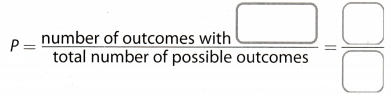
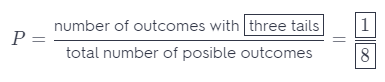
Complete the expression to find the probability of getting three tails.
Texas Go Math Grade 7 Lesson 6.2 Answer Key 6
Answer:
The probability of getting three tails when three coins are flipped is _________.
Answer:
Texas Go Math Grade 7 Lesson 6.2 Answer Key 16
The probability of getting three tails when three coins are flipped is \(\frac{1}{8}\).

Theoretical Probability of Compound Events Go Math Lesson 6.2 Question 8.
What is the probability of getting exactly two heads?
There are ________ way(s) to obtain exactly two heads: HHT, __________
Texas Go Math Grade 7 Lesson 6.2 Answer Key 7
Answer:
There are three ways to obtain exactly two heads. HHT, HTH, THH.
Texas Go Math Grade 7 Lesson 6.2 Answer Key 17
P = \(\frac{3}{8}\)

Essential Question Check-In

Question 9.
There are 6 ways a given compound event can occur. What else do you need to know to find the theoretical probability of the event?
Answer:
Formula for theoretical probability is:
P (event) = Texas Go Math Grade 7 Lesson 6.2 Answer Key 18
We know the number of ways the event can occur (6). therefore, to find a theoretical probability we need information for total number of equally likely outcomes.

Texas Go Math Grade 7 Lesson 6.2 Independent Practice Answer Key

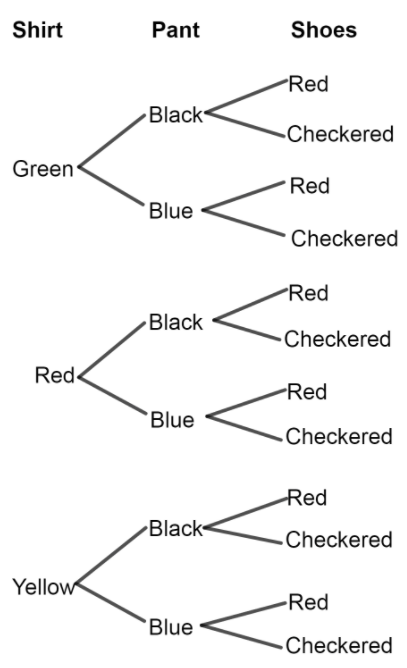
In Exercises 10-12, use the following information. Mattias gets dressed in the dark one morning and chooses his clothes at random. He chooses a shirt (green, red, or yellow), a pair of pants (black or blue), and a pair of shoes (checkered or red).

Question 10.
Use the space below to make a tree diagram to find the sample space.
Answer:
Texas Go Math Grade 7 Lesson 6.2 Answer Key 19
The sample space has 12 elements.

Question 11.
What is the probability that Mattias picks an outfit at random that includes red shoes? ___________________________
Answer:
Total number of possible outcomes is:
3 possibilities for shirt ∙ 2 possibilities for jeans ∙ 2 possibilities for shoes = 3 ∙ 2 ∙ 2 = 12
Number of outfit with red shoes: green-black-red shoes, green-blue-red shoes, red-black-red shoes, red-blue-red shoes, yellow-black-red shoes, yellow-bLue-red shoes = 6
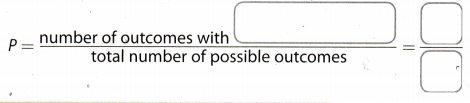
P (outfit with red shoes) = Texas Go Math Grade 7 Lesson 6.2 Answer Key 20
The probability of picking an outfit at random that includes red shoes is \(\frac{1}{2}\).

Go Math Lesson 6.2 7th Grade Compound Events Question 12.
What is the probability that no part of Mattias’s outfit is red? _____________________
Answer:
Total number of possible outcomes is:
3 possibilities for shirt ∙ 2 possibilities for jeans ∙ 2 possibiLities for shoes = 3 ∙ 2 ∙ 2 = 12
Number of outfit without red clothes or shoes: green-black-checkered, green-blue-checkered, yellow-black checkered, yellow-blue-checkered = 4
P (no part of outfit is red) = Texas Go Math Grade 7 Lesson 6.2 Answer Key 21
The probability that no part of Mattia’s outfit is red is \(\frac{1}{3}\).

Question 13.
Rhee and Pamela are two of the five members of a band. Every week, the band picks two members at random to play on their own for five minutes. What is the probability that Rhee and Pamela are chosen this week?
Answer:
Total number of possible outcomes is
5 possibilities to pick one member• 4 possibiLities to pick other member = 5 ∙ 4 = 20
To pick other member we have 4 possibiLities because we already pick one from five for first member so 5 – 1 = 4.
Number of possibilities to pick Pamela and Rhee at the same time is 2.
P (picking Pamela and Rhee) = Texas Go Math Grade 7 Lesson 6.2 Answer Key 22
The probability that Pamela and Rhee are chosen this week is \(\frac{1}{10}\)

Question 14.
Ben rolls two number cubes. What is the probability that the sum of the numbers he rolls is less than 6?
Answer:
Texas Go Math Grade 7 Lesson 6.2 Answer Key 23
Count how many numbers in the table are less than 6.
The probability that the sum of two numbers Ben rolls is less than 6 is number of the sum of two numbers that is less than 6 divided by total number of possible outcomes:
\(\frac{10}{36}\) = \(\frac{5}{18}\)
The probability that the sum of two numbers Ben rolls is less than 6 is \(\frac{5}{18}\).

Question 15.
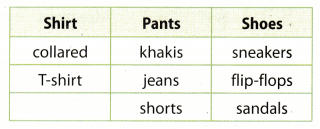
Nhan is getting dressed. He considers two different shirts, three pairs of pants, and three pairs of shoes. He chooses one of each of the articles at random. What is the probability that he will wear his jeans but not his sneakers?
Texas Go Math Grade 7 Lesson 6.2 Answer Key 8
Answer:
Number of combination with jeans but without sneakers: collared shirt, jeans and flip-flops; collared shirt, jeans and sandals; t-shirt, jeans and flip-flops; t-shirt, jeans and sandals.
P (wearing jeans but not sneakers) = Texas Go Math Grade 7 Lesson 6.2 Answer Key 24
The probability that he will wear his jeans but not his sneakers is \(\frac{2}{9}\).

Probability of Compound Events Worksheet Answers Question 16.
Communicate Mathematical Ideas A ski resort has 3 chair lifts, each with access to 6 ski trails. Explain how you can find the number of possible outcomes when choosing a chair lift and a ski trail without making a list, a tree diagram, or table.
Answer:
Each chair has access to 6 ski trails, therefore, number of possible outcomes is 3 ∙ 6 = 18.
Number of possible outcomes is 18.

Question 17.
Explain the Error For breakfast, Sarah can choose eggs, granola or oatmeal as a main course, and orange juice or milk for a drink. Sarah says that the sample space for choosing one of each contains 32 = 9 outcomes. What is her error? Explain.
Answer:
Sara’s error:She multiply possibilities of her meal which contain milk with eggs, granola and oatmeal and possibilities that contain orange jouce with egg, granola and oatmeal.

Right answer 5: With milk Sarah can choose eggs, granola and oatmeal and that is three possibilities.
With orange juice Sarah can choose eggs, granola and oatmeal, that also three possibilities.
Sample space is: 3 + 3 = 6
The sample space is 6 outcomes.

Question 18.
Represent Real-World Problems A new shoe comes in two colors, black or red, and in sizes from 5 to 12, including half sizes. If a pair of the shoes is chosen at random for a store display, what is the probability it will be red and size 9 or longer?
Answer:
Total number of possible outcomes: Contain 15 sizes of shoes and two color, so 15 ∙ 2 = 30
P (red and size 9 or larger) = Texas Go Math Grade 7 Lesson 6.2 Answer Key 25
The probability to choose red shoes with size 9 or larger is \(\frac{7}{30}\).

H.O.T. Focus on Higher Order Thinking

Question 19.
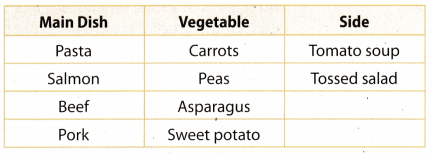
Analyze Relationships At a diner, Sondra tells the server, “Give me one item from each column.” Gretchen says, “Give me one main dish and a vegetable.” Who has a greater probability of getting a meal that includes salmon? Explain.
Texas Go Math Grade 7 Lesson 6.2 Answer Key 27
Answer:
Total number of possible outcomes for Sondra: She order main dish, vegetable and side, so 4 possibilities for mean dish 4 possibilities for vegetable ∙ 2 possibiLities for side = 32.

Number of meal with salmon for Sondra: 4 possibilities for vegetable multiply by 2 possibilities for side, so 4 ∙ 2 = 8

The probability of getting a meal that includes salmon for Sondra is:
P (getting a salmon) = Texas Go Math Grade 7 Lesson 6.2 Answer Key 26 = \(\frac{8}{32}\) = \(\frac{1}{4}\)
Total number of possible outcomes for Gretchen: She order main dish and vegetable, so 4 ∙ 4 ∙ 2 = 16
Number of meal with salmon for Gretchen: 2 possibilities for side, so 1 ∙ 2 = 2

The probability of getting a meaL that includes salmon for Gretchen is:
P (getting a salmon) = Texas Go Math Grade 7 Lesson 6.2 Answer Key 26 = \(\frac{2}{16}\) = \(\frac{1}{8}\)
Sondra has greater possibilities than Gretchen.

Lesson 6.2 Answer Key 7th Grade Go Math Question 20.
The digits 1 through 5 are used for a set of locker codes.
a. Look for a Pattern Suppose the digits cannot repeat. Find the number of possible two-digit codes and three-digit codes. Describe any pattern and use it to predict the number of possible five-digit codes.
Answer:
The total number of possible outcomes for two-digit code is:
5 possibilities for first digit ∙ 4 possibilities for second digit = 20

A total number of possible outcomes for three-digit code is:
5 possibilities for first digit ∙ 4 possibilities for second digit ∙ 3 possibilities for third digit = 60

Find the number of possible five-digit codes with an even number as the first digit. Digits do not repeat, and second, third, fourth, and fifth digits do not depend on number parity.

Total number of possible outcomes for five-digit code S:
2 possibilities for first digit ∙ 4 possibilities for second digit ∙ 3 possibilities for third ∙ 2 possibilities for forth ∙ 1 possibilities for fifth digit = 48

b. Look for a Pattern Repeat part a, but allow digits to repeat.
Answer:
Total number of possible outcomes for two-digits code is:
5 possibilities for first digit ∙ 5 possibilities for second digit = 25

Total number of possible outcomes for three-digits code is:
5 possibilities for first digit ∙ 5 possibilities for second dig it ∙ 5 possibilities for third digit = 125

Find the number of possible five-digits codes with even number as first digit Digits can be repeated, and second, third, forth and fifth digit do not depend on number parity.

Total number of possible outcomes for five-digits code is:
2 possibilities for first digit ∙ 5 possibilities for second digit ∙ 5 possibilities for third 5 possibilities for forth ∙ 5 possibilities for fifth digit = 1250

c. Justify Reasoning Suppose that a gym plans to issue numbered locker codes by choosing the digits at random. Should the gym use codes in which the digits can repeat or not? Justify your reasoning.
Answer:
The numbers can be repeated in codes, because in the enumeration starting from the unit, numbers like 11, 22, 33 etc. contain two identical. digits in the code.

Texas Go Math Grade 7 Lesson 6.2 Answer Key Theoretical Probability of Compound Events Read More »

Texas Go Math Grade 7 Module 4 Answer Key Proportionality in Geometry

Refer to our Texas Go Math Grade 7 Answer Key Pdf to score good marks in the exams. Test yourself by practicing the problems from Texas Go Math Grade 7 Module 4 Answer Key Proportionality in Geometry.

Texas Go Math Grade 7 Module 4 Answer Key Proportionality in Geometry

Texas Go Math Grade 7 Module 4 Are You Ready? Answer Key

Write each fraction in simplest form.

Question 1.
\(\frac{25}{30}\) ___________
Answer:
Simplify . \(\frac{25}{30}\)
1. List all the factors of the numerator and denominator.
2. Circle the greatest common factor (GCF).
3. Divide the numerator and denominator by the GCF.
25: 1, Texas Go Math Grade 7 Module 4 Answer Key 4, 25
30: 1, 2, 3, Texas Go Math Grade 7 Module 4 Answer Key 4, 6, 10, 15, 30
\(\frac{25 \div 5}{30 \div 5}\) = \(\frac{5}{6}\)

Grade 7 Go Math Module 4 Answer Key Question 2.
\(\frac{27}{36}\) ___________
Answer:
Simplify . \(\frac{27}{36}\)
1. List all the factors of the numerator and denominator.
2. Circle the greatest common factor (GCF).
3. Divide the numerator and denominator by the GCF.
27: 1, 3, Texas Go Math Grade 7 Module 4 Answer Key 5, 27
36: 1, 2. 3, 4, 6, Texas Go Math Grade 7 Module 4 Answer Key 5, 12, 18, 36
\(\frac{27 \div 9}{36 \div 9}\) = \(\frac{3}{4}\)

Question 3.
\(\frac{14}{19}\) ___________
Answer:
Simiplify \(\frac{14}{19}\)
1. List ail the factors of the numerator and denominator.
2. Circle the greatest common factor (GCF).
3. Divide the numerator and denominator by the GCF.
14: 1, Texas Go Math Grade 7 Module 4 Answer Key 6, 7, 14
16: 1, Texas Go Math Grade 7 Module 4 Answer Key 6, 4, 8, 16
\(\frac{14 \div 2}{16 \div 2}\) = \(\frac{7}{8}\)

Question 4.
\(\frac{15}{45}\) ___________
Answer:
Simplify \(\frac{15}{45}\)
1. List ail the factors of the nuiiiera.tor and denominator.
2. Circle the greatest common factor (GCF).
3. Divide the numerator anti denominator by the GCF.
15: 1. 3, 5, Texas Go Math Grade 7 Module 4 Answer Key 7
30: 1. 3, 5. 9, Texas Go Math Grade 7 Module 4 Answer Key 7, 45
\(\frac{15 \div 15}{45 \div 15}\) = \(\frac{1}{3}\)

Write each fraction as a decimal.

Question 5.
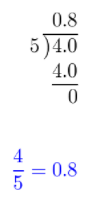
\(\frac{4}{5}\) ________
Answer:
Use long division to write the fraction as a decimal:
Texas Go Math Grade 7 Module 4 Answer Key 8

Go Math Grade 7 Module 4 Answer Key Pdf Question 6.
\(\frac{3}{8}\) __________
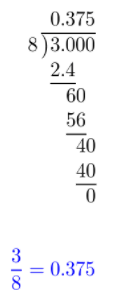
Answer:
Use long division to write the fraction as a decimal:
Texas Go Math Grade 7 Module 4 Answer Key 9

Question 7.
\(\frac{15}{16}\) ____________
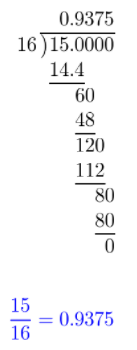
Answer:
Use long division to write the fraction as a decimal:
Texas Go Math Grade 7 Module 4 Answer Key 10

Go Math Module 4 Grade 7 Answer Key Question 8.
\(\frac{13}{20}\) ____________
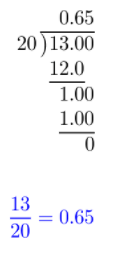
Answer:
Use long division to write the fraction as a decimal:
Texas Go Math Grade 7 Module 4 Answer Key 11

Find the area of each rectangle.

Question 9.
l = 10 cm, w = 4cm __________
Answer:
A = l × w
A = 10 × 4
A = 40 cm2

Question 10.
l = 14 in., w = 9.5 in. ________

Answer:
A = l × w
A = 14 × 9.5

A = 133 in.2

Grade 7 Go Math Module 4 Answer Key Question 11.
l = 0.7cm, w = 0.35cm _______
Answer:
A = l × w
A = 0.7 × 0.35
A = 0.245 cm2

Question 12.
l = \(\frac{2}{3}\) yd, w = \(\frac{1}{2}\) yd ___________
Answer:
A = l × w
A = \(\frac{2}{3}\) × \(\frac{1}{2}\)
A = \(\frac{1}{3}\) yd2

Texas Go Math Grade 7 Module 4 Reading Start-Up Answer Key

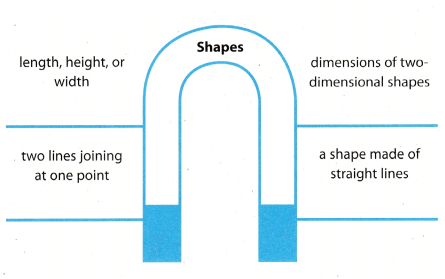
Visualize Vocabulary

Use the ✓ words to complete the graphic. You may put more than one word on each line.
Texas Go Math Grade 7 Module 4 Answer Key 1
Texas Go Math Grade 7 Module 4 Answer Key 2

Understand Vocabulary

Complete the sentences using the preview words.

Question 1.
What is a proportional two-dimensional drawing of an object? ______________________
Answer:
A proportional two-dimensional drawing of an object is scale drawing.

Geometry Module 4 Answers Go Math Grade 7 Question 2.
What is the distance around a circle? ______________________
Answer:
The distance around a circle is circumference.

Question 3.
What is a line segment that passes through the center of a circle and has both endpoints on the circle? _______________________
Answer:
A line segment that passes through the center of a circle and has both endpoints on the circle is diameter.

Active Reading
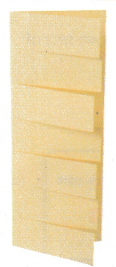
Key-Term Fold Before beginning the module, create a key-term fold to help you learn the vocabulary in this module. Write each highlighted vocabulary word on one side of a flap. Write the definition for each word on the other side of the flap. Use the key-term fold to quiz yourself on the definitions in this module.
Texas Go Math Grade 7 Module 4 Answer Key 3

Texas Go Math Grade 7 Module 4 Answer Key Proportionality in Geometry Read More »

Texas Go Math Grade 7 Lesson 6.1 Answer Key Theoretical Probability of Simple Events

Refer to our Texas Go Math Grade 7 Answer Key Pdf to score good marks in the exams. Test yourself by practicing the problems from Texas Go Math Grade 7 Lesson 6.1 Answer Key Theoretical Probability of Simple Events.

Texas Go Math Grade 7 Lesson 6.1 Answer Key Theoretical Probability of Simple Events

Texas Go Math Grade 7 Lesson 6.1 Explore Activity Answer Key

Explore Activity 1

Finding Theoretical Probability

In previous lessons, you found probabilities based on observing data, or experimental probabilities. In this lesson, you will find theoretical probabilities.

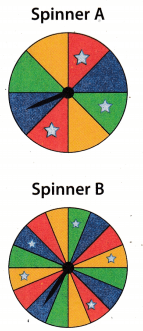
At a school fair, you have a choice of spinning Spinner A or Spinner B. You win an MP3 player if the spinner lands on a section with a star in it. Which spinner should you choose if you want a better chance of winning?
Texas Go Math Grade 7 Lesson 6.1 Answer Key 1
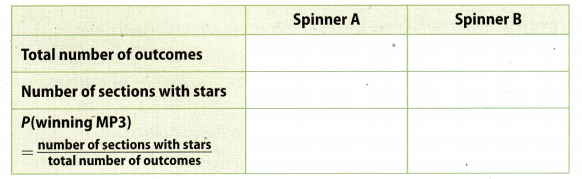
A. Complete the table.
Texas Go Math Grade 7 Lesson 6.1 Answer Key 2

B. Compare the ratios for Spinner A and Spinner B.
The ratio for Spinner ________ is greater than the ratio for Spinner _________.
I should choose ________________ for a better chance of winning.

Math Talk
Mathematical Processes

Describe a way to change Spinner B to make your chances of winning equal to your chances of not winning. Explain.
Answer:

Reflect

Lesson 6.1 Probability of Simple Events Answer Key Question 1.
Theoretical probability is a way to describe how you found the chance of winning an MP3 player in the scenario above. Using the spinner example to help you, explain in your own words how to find the theoretical probability of an event.
Answer:
First, find the total number of outcomes for an event
Then find a number of favorable outcomes.
The probability of an event is the ratio of the number of favorable outcomes divided by the total number of outcomes.

Math Talk
Mathematical Processes

Describe a situation that has a theoretical probability of \(\frac{1}{4}\).
Answer:

Your Turn

Question 2.
You roll a number cube one time. What is the probability that you roll a 3 or 4? Write your answer in simplest form.
P(rolling a 3 or 4) = Texas Go Math Grade 7 Lesson 6.1 Answer Key 3
Answer:
P(rolling a 3 or 4) = Texas Go Math Grade 7 Lesson 6.1 Answer Key 14
The probability that you roll 3 or 4 is \(\frac{1}{3}\).

Simple Probability Answer Key Lesson 6.1 Question 3.
How is the sample space for an event related to the formula for theoretical probability?
Answer:
The size of the sample space is the total number of possible outcomes.

Explore Activity 2

Comparing Theoretical and Experimental Probability

Now that you have calculated theoretical probabilities, you may wonder how theoretical and experimental probabilities compare.
Texas Go Math Grade 7 Lesson 6.1 Answer Key 4
Six students are performing in a talent contest. You roll a number cube to determine the order of the performances.
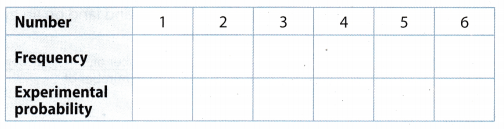
STEP 1: You roll the number cube once. Complete the table of theoretical probabilities for the different outcomes.
Texas Go Math Grade 7 Lesson 6.1 Answer Key 5

STEP 2: Predict the number of times each number will be rolled out of 30 total rolls.
Texas Go Math Grade 7 Lesson 6.1 Answer Key 6

STEP 3: Roll a number cube 30 times. Complete the table find its experimental of each number and then find its experimental probability.
Texas Go Math Grade 7 Lesson 6.1 Answer Key 7

STEP 4: Look at the tables you completed. How do the experimental probabilities compare with the theoretical probabilities?

STEP 5: By performing more trials, you tend to get experimental results that are closer to the theoretical probabilities. Combine your frequency results from Step 3 with those of your classmates to make one table for the class. How do the class experimental probabilities compare with the theoretical probabilities?

Reflect

Question 4.
Could the experimental probabilities ever be exactly equal to the theoretical probability? If so, how likely is it? If not, why not?
Answer:
The theoretical probability is what you expect to happen, but it isn’t always what actually happens. As more trials are conducted, the experimental probability generally gets closer to the theoretical probability.

Texas Go Math Grade 7 Lesson 6.1 Guided Practice Answer key

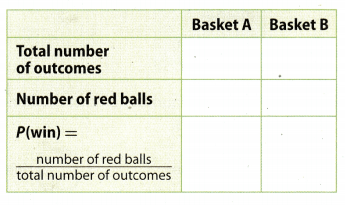
At a school fair, you have a choice of randomly picking a ball from Basket A or Basket B. Basket A has 5 green balls, 3 red balls, and 8 yellow balls. Basket B has 7 green balls, 4 red balls, and 9 yellow balls. You can win a digital book reader if you pick a red ball. (Explore Activity 1)
Texas Go Math Grade 7 Lesson 6.1 Answer Key 8
Question 1.
Complete the chart. Write each answer in simplest form.
Answer:
Texas Go Math Grade 7 Lesson 6.1 Answer Key 15
Total numbers of outcomes for Basket A is the number of all balls in Basket A – 16.
Total numbers of outcomes for Basket B is the number of all balls in Basket B – 20.
Probability to win ¡s probability to pick red ball from basket. Therefore, probability is number of red balls divided by total number of balls in basket.

Question 2.
Which basket should you choose if you want the better chance of winning?
Answer:
You should choose Basket B if you want the better chance of winning because probability to pick a red ball, from Basket A is less than probability to pick a red ball from Basket B:
0.18 = \(\frac{3}{16}\) < \(\frac{4}{20}\) = 0.20

A spinner has 11 equal-sized sections marked 1 through 11. Find each probability. (Example 1)

Question 3.
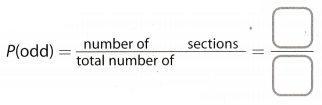
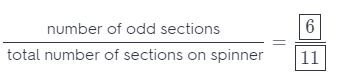
You spin once and land on an odd number.
Texas Go Math Grade 7 Lesson 6.1 Answer Key 9
Answer:
P (odd) = Texas Go Math Grade 7 Lesson 6.1 Answer Key 16
P (odd) = \(\frac{6}{11}\)

Go Math Grade 7 Lesson 6.1 Answer Key Question 4.
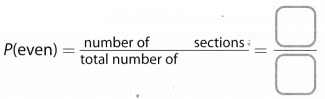
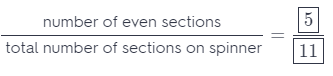
You spin once and land on an even number.
Texas Go Math Grade 7 Lesson 6.1 Answer Key 10
Answer:
P (even) = Texas Go Math Grade 7 Lesson 6.1 Answer Key 17
P (even) = \(\frac{5}{11}\)

You roll a number cube once.

Question 5.
What is the theoretical probability that you roll a 3 or 4? (Example 1)
Answer:
P (rolling a 3 or 4) = Texas Go Math Grade 7 Lesson 6.1 Answer Key 18
P (rolling a 3 or 4) = \(\frac{1}{3}\)

Question 6.
Suppose you rolled the number cube 199 more times. Would you expect the experimental probability of rolling a 3 or 4 to be the same as your answer to Exercise 5? (Explore Activity 2)
Answer:
As more trials are conducted, the experimental probability generally gets closer to the theoretical probability. Each experiment has independent throws, which means if we roll some number that doesn’t condition the other throws, it does not have to appear the same answer as in Exercise 5.

Don’t expect that the experimental probability of rotting a 3 or 4 is the same as the experimental probability in Exercise 5

Essential Question Check-In

Question 7.
How can you find the probability of a simple event if the total number of equally likely outcomes is 20?
Answer:
If there are 20 equally likely simple events in the sample space, then the probability for each is \(\frac{1}{20}\).

Texas Go Math Grade 7 Lesson 6.1 Independent Practice Answer Key

Find the probability of each event. Write each answer as a fraction in simplest form, as a decimal to the nearest hundredth, and as a percent to the nearest whole number.

Question 8.
You spin the spinner shown. The spinner lands on yellow.
Texas Go Math Grade 7 Lesson 6.1 Answer Key 11
Answer:
P (Spinner land on yellow) = Texas Go Math Grade 7 Lesson 6.1 Answer Key 19
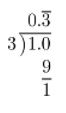
Find a decimal and a percent value of fraction.
Texas Go Math Grade 7 Lesson 6.1 Answer Key 20
The result is: 0.33
Move the decimal point two places to the right and add the ‘ %“ sign.
0.33 = 33%
\(\frac{1}{3}\) = 33%

Question 9.
You spin the spinner shown. The spinner lands on blue or green.
Texas Go Math Grade 7 Lesson 6.1 Answer Key 12
Answer:
P (Spinner land on blue or green) = Texas Go Math Grade 7 Lesson 6.1 Answer Key 21
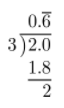
Find a decimal and a percent value of a fraction.
Texas Go Math Grade 7 Lesson 6.1 Answer Key 22
The result is: 0.66
Move the decimal point two places to the right and add the ‘ %“ sign.
0.66 = 66%
\(\frac{2}{3}\) = 66%

Theoretical Probability of Simple Events Lesson 6.1 Answer Key Question 10.
Ajar contains 4 cherry cough drops and 10 honey cough drops. You choose one cough drop without looking. The cough drop is cherry.
Answer:
P (choose cherry cough drops) = Texas Go Math Grade 7 Lesson 6.1 Answer Key 23
Find a decimal and a percent value of fraction.
Texas Go Math Grade 7 Lesson 6.1 Answer Key 24
The result is: 0.44
Move the decimal point two places to the right and add the ‘ %“ sign.
0.40 = 40%
\(\frac{2}{5}\) = 40%

Question 11.
You pick one card at random from a standard deck of 52 playing cards. You pick a black card.
Answer:
P (picking a black card) = Texas Go Math Grade 7 Lesson 6.1 Answer Key 25
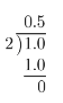
Find a decimal and a percent value of fraction.
Texas Go Math Grade 7 Lesson 6.1 Answer Key 26
The result is: 0.50
Move the decimal point two places to the right and add the ‘ %“ sign.
0.50 = 50%
\(\frac{1}{2}\) = 50%

Question 12.
There are 12 pieces of fruit in a bowl. Five are lemons and the rest are limes. You choose a piece of fruit without looking. The piece of fruit is a lime.
Answer:
P (choosing a lime) = Texas Go Math Grade 7 Lesson 6.1 Answer Key 27
Find a decimal and a percent value of fraction.
Texas Go Math Grade 7 Lesson 6.1 Answer Key 28
The result is: 0.58
Move the decimal point two places to the right and add the ‘ %“ sign.
0.58 = 58%
\(\frac{7}{12}\) = 58%

Question 13.
You choose a movie CD at random from a case containing 8 comedy CDs, 5 science fiction CDs, and 7 adventure CDs. The CD is not a comedy.
Answer:
Texas Go Math Grade 7 Lesson 6.1 Answer Key 29
The result is: 0.60
Move the decimal point two places to the right and add the ‘ %“ sign.
0.60 = 60%
\(\frac{3}{5}\) = 60%

Question 14.
You roll a number cube. You roll a number that is greater than 2 and less than 5.
Answer:
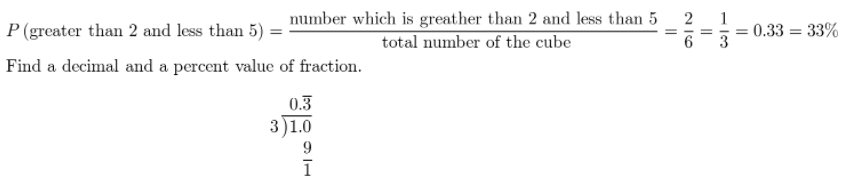
Number greater than 2 and less than 5 is 3 and 4, so we have two numbers that meet this requirement.
Texas Go Math Grade 7 Lesson 6.1 Answer Key 30
The result is: 0.33
Move the decimal point two places to the right and add the ‘ %“ sign.
0.33 = 33%
\(\frac{1}{3}\) = 33%

Lesson 6.1 Probability Answer Key Go Math Grade 7 Question 15.
Communicate Mathematical Ideas The theoretical probability of a given event is \(\frac{9}{13}\). Explain what each number represents.
Answer:
Number 9 represents the number of ways the event can occur and 13 represents a total number of equally likely outcomes.

Question 16.
Leona has 4 nickels, 6 pennies, 4 dimes, and 2 quarters in a change purse. Leona lets her little sister Daisy pick a coin at random. If Daisy is equally likely to pick each type of coin, what is the probability that her coin is worth more than five cents? Explain.
Answer:
Penny is worth 1 cent, a Nickel. 5 cents, a Dime 10 cents and a quarter is worth 25 cents. First, find a total number of coins that are worth more than 5 cents. Those are nickles, dimes, and quarters.
Then find the number of all coins. It is 16. The probability to pick more than five cents is:
P (more than five cents) = Texas Go Math Grade 7 Lesson 6.1 Answer Key 31
P (more than five cents) = \(\frac{5}{8}\)

H.O.T. Focus on Higher Order Thinking

Question 17.
Critique Reasoning A bowl of flower seeds contains 5 petunia seeds and 15 begonia seeds. Riley calculated the probability that a randomly selected seed is a petunia seed as \(\frac{1}{3}\). Describe and correct Riley’s error.
Answer:
Riley’s error: He divided the number of petunia seeds by the number of begonia seeds.
The right answer is:
P (selecting seed of petunia) = Texas Go Math Grade 7 Lesson 6.1 Answer Key 32
P (selecting seed of petunia) = \(\frac{1}{4}\)

Question 18.
There are 20 seventh graders and 15 eighth graders in a club. A club president will be chosen at random.
a. Analyze Relationships Compare the probabilities of choosing a seventh grader or an eighth grader.
Answer:
Texas Go Math Grade 7 Lesson 6.1 Answer Key 33

b. Critical Thinking If a student from one grade is more likely to be chosen than a student from the other, is the method unfair? Explain.
Answer:
There are more students from seventh grade than students from eighth grade, but how we chose at random this method is not unfair.

A jar contains 8 red marbles, 10 blue ones, and 2 yellow ones. One marble is chosen at random. The color is recorded in the table, and then it is returned to the jar. This is repeated 40 times.
Texas Go Math Grade 7 Lesson 6.1 Answer Key 13
Question 19.
Communicate Mathematical Ideas Use proportional reasoning to explain how you know that for each color, the theoretical and experimental probabilities are not the same.
Answer:
The theoretical probability is:
Texas Go Math Grade 7 Lesson 6.1 Answer Key 34
The experimental probability is:
Texas Go Math Grade 7 Lesson 6.1 Answer Key 35
In this exercise total number of possible outcomes and total number of trials are the same because we have 40 marbles and 40 trials.

The number of favorable outcomes is determined by a number of each color, while the number of times the event occurs can be different from one experiment to another experiment.

In order for probabilities to be the same in this exercise, the number of favorable outcomes should be equal to the number of times the event occurs, but it does not matter in the general case.

Question 20.
Persevere in Problem-Solving For which color marble is the experimental probability closest to the theoretical probability? Explain.
Answer:
As there are more marbles of a certain color, it is more likely for the person to choose them. In the theoretical probability we know exactly what is the possibility while in the experimental use of logical locking, the more objects are, the more likely it ¡s to choose them In our exercise for blue marbles is the experimental probability closest to the theoretical probability.

Texas Go Math Grade 7 Lesson 6.1 Answer Key Theoretical Probability of Simple Events Read More »

Texas Go Math Grade 7 Lesson 5.3 Answer Key Experimental Probability of Compound Events

Refer to our Texas Go Math Grade 7 Answer Key Pdf to score good marks in the exams. Test yourself by practicing the problems from Texas Go Math Grade 7 Lesson 5.3 Answer Key Experimental Probability of Compound Events.

Texas Go Math Grade 7 Lesson 5.3 Answer Key Experimental Probability of Compound Events

Texas Go Math Grade 7 Lesson 5.3 Explore Activity Answer Key

Exploring Compound Probability

A compound event is an event that includes two or more simple events, such as flipping a coin and rolling a number cube. A compound event can include events that depend on each other or are independent. Events are independent if the occurrence of one event does not affect the probability of the other event, such as flipping a coin and rolling a number cube.

A. What are the possible outcomes of flipping a coin once?
B. What are the possible outcomes of rolling a standard number cube once?
C. Complete the list for all possible outcomes for flipping a coin and rolling a number cube.
H1, H2, ______, ______, ______, ______, T1, ______, ______, ______, ______, ______
H1 would mean the coin landed on heads, and the number cube showed a 1.
There are __________ possible outcomes for this compound event.
D. Flip a coin and roll a number cube 50 times. Use tally marks to record your results in the table.
Texas Go Math Grade 7 Lesson 5.3 Answer Key 1
E. Based on your data, which compound event had the greatest experimental probability and what was it? The least experimental
probability?
F. Draw Conclusions Did you expect to have the same probability for each possible combination of flips and rolls? Why or why not?

Your Turn

7th Grade Go Math Answer Key Lesson 5.3 Question 1.
Drink sales for an afternoon at the school carnival were recorded in the table. What is the experimental probability that the next drink is a small coffee?
Texas Go Math Grade 7 Lesson 5.3 Answer Key 2
Answer:
The total number of trials or orders is
77 + 98 + 60 + 68 + 45 + 52 = 400
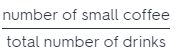
P(small coffee) = Texas Go Math Grade 7 Lesson 5.3 Answer Key 9 Substitute 60 for a number of small coffee, and 400 for a total number of drinks.
P(small coffee) = \(\frac{60}{400}\)
P(small coffee) = \(\frac{3 \cdot 20}{20 \cdot 20}\)
P(small coffee) = \(\frac{3}{20}\)
The experimental probability that the next drink is a small coffee is \(\frac{3}{20}\)

Reflect

Question 2.
Make a Prediction Predict the number of cars that turn right out of 100 vehicles that enter the intersection. Explain your reasoning.
Answer:
Use Proportion
Texas Go Math Grade 7 Lesson 5.3 Answer Key 10
You can predict that 12 out of 100 vehicles will be cars that turn right.

Your Turn

Lesson 5.3 Answer Key 7th Grade Compound Probability Question 3.
A jeweler sells necklaces made in three sizes and two different metals. Use the data from a simulation to find the experimental probability that the next necklace sold is a 20-inch gold necklace.
Texas Go Math Grade 7 Lesson 5.3 Answer Key 3
Answer:
P (sold necklace is a 20-inch gold necklace) = Texas Go Math Grade 7 Lesson 5.3 Answer Key 11
P (sold necklace is a 20-inch gold necklace) = \(\frac{4}{25}\)

Texas Go Math Grade 7 Lesson 5.3 Guided Practice Answer Key

Question 1.
A dentist has 400 male and female patients that range in ages from 10 years old to 50 years old and up as shown in the table. What is the experimental probability that the next patient will be female and in the age range 22-39? (Explore Activity and Example 1)
Texas Go Math Grade 7 Lesson 5.3 Answer Key 4
Answer:
Total number of trials is
44 + 66 + 32 + 53 + 36 + 50 + 45 + 74 = 400
The number of female in the age range 22 – 39 is 50
Texas Go Math Grade 7 Lesson 5.3 Answer Key 12
The experimental probability that the next patient will be female and in the age range 22 – 39 is \(\frac{5}{40}\).

Go Math Answer Key Grade 7 Compound Probability Question 2.
At a car wash, customers can choose the type of wash and whether to use the interior vacuum. Customers are equally likely to choose each type of wash and whether to use the vacuum. Use a simulation to find the experimental probability that the next customer purchases a deluxe wash and no interior vacuum. Describe your simulation. (Example 2)
Texas Go Math Grade 7 Lesson 5.3 Answer Key 5
Answer:
Lets look at the standard cube and let each number indicate one of the possibilities:
1- Deluxe wash without interior vacuum
2-DeLuxe washing with interior vacuum
3-Standard washing with interior vacuum
4-Standard washing without interior vacuum
5-Superior washing with interior vacuum
6-Superior washing without interior vacuum
Let’s throw the cube 10 times and find the experimental probability of the number of deluxe washing with no interior vacuum
We get:
1, 5, 6, 4, 2, 1, 2, 5, 6, 3
The experimental probabiLity that the next costumers purchases a deluxe wash with no interior vacuum is \(\frac{2}{6}\) = \(\frac{1}{3}\).

Essential Question Check-In

Question 3.
How do you find the experimental probability of a compound event?
Answer:
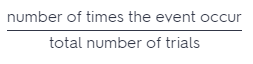
Experimental probability of a compound event is the number which we get when the number of times the event occurs divide by total number of trials.

Texas Go Math Grade 7 Lesson 5.3 Independent Practice Answer Key

Question 4.
Represent Real-World Problems For the same food trailer mentioned in Example 1, explain how to find the experimental probability that the next order is two pieces of chicken with a green salad.
Answer:
Total number of trials, or orders is
33 + 22 + 52 + 35 + 13 + 55 + 65 + 55 = 330
The number of 2 piece + green salad is 33.
Texas Go Math Grade 7 Lesson 5.3 Answer Key 13
The experimental probability that the next order is 2 piece + green salad is \(\frac{1}{10}\).

The school store sells spiral notebooks in four colors and three different sizes. The table shows the sales by size and color for 400 notebooks.
Texas Go Math Grade 7 Lesson 5.3 Answer Key 6

Go Math Grade 7 Pdf Experimental Probability of Compound Events Question 5.
What is the experimental probability that the next customer will buy a red notebook with 150 pages?
Answer:
The total number of trials, or notebooks is
55 + 37 + 26 + 12 + 60 + 44 + 57 + 27 + 23 + 19 + 21 + 19 = 400
The number of red notebooks with 150 pages is 60.
number of red notebooks with 150 pages
Texas Go Math Grade 7 Lesson 5.3 Answer Key 14
The experimental probability that the next customer buys a red notebook with 150 pages is \(\frac{3}{20}\).

Question 6.
What is the experimental probability that the next customer buys any red notebook?
Answer:
Total number of trials, or notebooks is
55 + 37 + 26 + 12 + 60 + 44 + 57 + 27 + 23 + 19 + 21 + 19 = 400
The number of red notebook is 138
Texas Go Math Grade 7 Lesson 5.3 Answer Key 15
The experimental probability that the next customer buys a red notebook is \(\frac{63}{200}\).

Question 7.
Analyze Relationships How many possible combined page count and color choices are possible? How does this number relate to the number of page size choices and to the number of color choices?
Answer:
We have 3 choices for page size and 4 choices for color, therefore, we have 3 ∙ 4 = 12 possibilities to combine page size and color
Relate of number of possibilities to combine and number of choices for size is: 12 : 3 = 4 : 1
Relate of number of possibilities to combine and number of choices for color is: 12 : 4 = 3 : 1

A middle school English teacher polled random students about how many pages of a book they read per week.
Texas Go Math Grade 7 Lesson 5.3 Answer Key 7

Lesson 5.3 Answer Key 5th Grade Go Math Question 8.
Critique Reasoning Jennie says the experimental probability that a 7th-grade student reads at least 100 pages per week is \(\frac{16}{125}\). What is her error and the correct experimental probability?
Answer:
Total number of trials, or pages of book is
24 + 18 + 22 + 22 + 32 + 24 + 30 + 53 + 25 = 250
At least 100 pages means that a student reads 100 or more pages.
To the probability she calculated we have to add the probability that a 7th grade student reads 150 pages per week.
The number of 7th grade students who reads 150 pages per week is 53.
Texas Go Math Grade 7 Lesson 5.3 Answer Key 16
The experimental probability that a 7th grade students reads at least 100 pages per week is \(\frac{17}{50}\).

Question 9.
Analyze Relationships Based on the data, which group(s) of students should be encouraged to read more? Explain your reasoning.
Answer:
Based on the data gathered for the group of students who read books, the encouragement to read more should be done for Grade 8 students. This is because they have the lowest data among the 3 groups.

H.O.T. Focus on Higher Order Thinking

Lesson 5.3 Probability of Compound Events Answer Key Question 10.
Make a Conjecture Would you expect the probability for the simple event “rolling a 6” to be greater than or less than the probability of the compound event “rolling a 6 and getting heads on a coin”? Explain.
Answer:
Total number of possible outcomes is 1, 2, 3, 4, 5, 6, therefore 6 possibilities.
P1 (rolling a 6) = Texas Go Math Grade 7 Lesson 5.3 Answer Key 17 = \(\frac{1}{6}\)
Total number of possible outcomes is 6 possibilities for a cube and 2 possibilities for a coin, therefore 12.
P2 (rolling a 6 and getting a head) = Texas Go Math Grade 7 Lesson 5.3 Answer Key 17 = \(\frac{1}{12}\)
Conclusion: P1 > P2

Question 11.
Critique Reasoning Donald says he uses a standard number cube for simulations that involve 2, 3, or 6 equal outcomes. Explain how Donald can do this.
Answer:
Involve two equal outcomes:
Let 6 balls in the bag, 3 white and 3 blue. If we throw the number 1, 2, or 3, we pick the bLue, otherwise we pick the white one.

Involve three equal outcomes:
Let 6 balls in the bag, 2 white, 2 blue and 2 yellow. If we throw the number 1 or 2, we pick the blue, 3 or 4 we pick the white one, otherwise wi pick a yellow ball.

Involve six equal outcomes:
Let 6 balls in the bag, white, blue yellow, red, green and orange. If we throw the number 1 we pick the blue, 2 we pick the white one, 3- yelLow, 4-green, 5-orange 6-red ball.

Question 12.
Draw Conclusions Data collected in a mall recorded the shoe styles worn by 150 male and 150 female customers. What is the probability that the next customer is male and has an open-toe shoe (such as a sandal)? What is the probability that the next male customer has an open-toe shoe? Are the two probabilities the same? Explain.
Texas Go Math Grade 7 Lesson 5.3 Answer Key 8
Answer:
Total number of trials, or customers is
11 + 92 + 139 + 58 = 300
The number of male who has an open toe shoe is 11.
Texas Go Math Grade 7 Lesson 5.3 Answer Key 18
No, they are not because the total number of trials are different. In the first case, we observe all customers, and in the second we only observe male customers.

Lesson 5.3 Answer Key 7th Grade Compound Events Go Math Question 13.
What If? Suppose you wanted to perform a simulation to model the shoe style data shown in the table. Could you use two coins? Explain.
Answer:
Yes, we can If we throw the first coin and the tails falls a male customers is watching, otherwise we observe female costumers. If we throw a second coin, and a head falls, the costumers are with open toe shoes, otherwise is closed toe shoes.

Question 14.
Represent Real-World Problems A middle school is made up of grades 6, 7, and 8, and has about the same number of male and female students in each grade. Explain how to use a simulation to find the experimental probability that the first 50 students who arrive at school are male and 7th graders.
Answer:
Let’s use a standard cube. Let the numbers represent the following:
1-male student of the sixth grade
2- female student of the sixth grade
3-maLe student of the seventh grade
4-female student of the seventh grade
5-male student of the eighth grade
6-female student of the eighth grade
Let’s throw the dice 50 times and calculate how many times the number 1 will be rolled.

Texas Go Math Grade 7 Lesson 5.3 Answer Key Experimental Probability of Compound Events Read More »

Texas Go Math Grade 7 Lesson 3.3 Answer Key Markup and Markdown

Refer to our Texas Go Math Grade 7 Answer Key Pdf to score good marks in the exams. Test yourself by practicing the problems from Texas Go Math Grade 7 Lesson 3.3 Answer Key Markup and Markdown.

Texas Go Math Grade 7 Lesson 3.3 Answer Key Markup and Markdown

Example 1
To make a profit, stores mark up the prices on the items they sell. A sports store buys skateboards from a supplier for s dollars. What is the retail price for skateboards that the manager buys for $35 and $56 after a 42% markup?
Texas Go Math Grade 7 Lesson 3.3 Answer Key 6
Step 1: Use a bar model.
Draw a bar for the cost of the skateboard s.
Then draw a bar that shows the markup: 42% of s, or 0.42s.
Texas Go Math Grade 7 Lesson 3.3 Answer Key 7
These bars together represent the cost plus the markup, s + 0.42s.

Step 2: Retail price Original cost + Markup
= s + 0.42s
= 1s + 0.42s
= 1.42s

Step 3: Use the expression to find the retail price of each skateboard.
s = $35 → Retail price = 1.42($35) = $49.70
s = $56 → Retail price = 1.42($56) = $79.52

Reflect

Lesson 3.3 Markup and Markdown Answer Key 7th Grade Question 1.
What If? The markup is changed to 34%; how does the expression for the retail price change?
Answer:
The expression for the retail price now looks like this:
Retail price = Original cost + Markup
= s + 0.34s
= 1 s + 0.34s
= 1.34s
Retail price = 1.34s

Your Turn

Question 2.
Rick buys remote-controlled cars to resell. He applies a markup of 10%.
a. Write two expressions that represent the retail price of the cars.
Answer:
Retail price = Original cost + Markup
= s + 0.10s
= 1.10s (= 110% × s)

b. If Rick buys a control car for $28.00, what is his selling price?
Answer:
Using the expression above, calculate the selling price.
s = $28 ⇒ Retail price 1.10 × $28 = $30.8

Question 3.
An exclusive clothing boutique triples the price of the items it purchases for resale.
a. What is the boutique’s markup percentage? ____________________________
Answer:
Let p be the markup and s the original price. The boutique triples its original price, Thus, the end price is 3s
s + p × s = 3s
1 + p = 3
p = 2 (Divide by s)
p = 200%

b. Write two expressions that represent the retail price of the clothes.
Answer:
Retail price = Original cost + Markup
= s + 2s
= 3s (= 300% × s)

Example 2

A discount store marks down all of its holiday merchandise by 20% off the regular selling price. Find the discounted price of decorations that regularly sell for $16 and $23.

Step 1: Use a bar model.
Draw a bar for the regular price p.
Then draw a bar that shows the discount: 20% of p, or 0.2p.
Texas Go Math Grade 7 Lesson 3.3 Answer Key 1
The difference between these two bars represents the price minus the discount, p – 0.2p.

Step 2: Sale price = Original price – Markdown
= p – 0.2p
= 1 p – 0.2p
= 0.8p

Step 3: Use the expression to find the sale price of each decoration.
p = $16 → Retail price = 0.8($16) = $12.80
p = $23 → Retail price = 0.8($23) = $18.40

Reflect

Question 4.
Conjecture Compare the single-term expression for retail price after a markup from Example 1 and the single-term expression for sale price after a markdown from Example 2. What do you notice about the coefficients in the two expressions?
Answer:
The first coefficient is greater than 1, and the second is less than 1.

Your Turn

Go Math Grade 7 Lesson 3.3 Mark Up Mark Down Answer Key  Question 5.
A bicycle shop marks down each bicycle’s selling price b by 24% for a holiday sale.
a. Draw a bar model to represent the problem.
Answer:
Picture below
Texas Go Math Grade 7 Lesson 3.3 Answer Key 4

b. What is a single term expression for the sale price?
Answer:
Sale price = Original price – Markdown
= b – 0.24b
= 0.76b

Question 6.
Jane sells pillows. For a sale, she marks them down 5%.
a. Write two expressions that represent the sale price of the pillows.
Answer:
Retail price = Original cost – Markdown
= p – 0.05p
= 0.95p(= 95% × s)

b. If the original price of a pillow is $15.00, what ¡s the sale price?
Answer:
Using the expression above, calculate the selling price.
s = $15 ⇒ Retail price = 0.95 × $15 = $14.25

Texas Go Math Grade 7 Lesson 3.3 Guided Practice Answer Key

Question 1.
Dana buys dress shirts from a clothing manufacturer for s dollars each and then sells the dress shirts in her retail clothing store at a 35% markup. (Example 1)
a. Write the markup as a decimal. __________________________________
Answer:
Markup = 35% = 0.35

b. Write an expression for the retail price of the dress shirt. _____________
Answer:
Retail price = Original cost + Markup
= s + 0.35s
= 1.35s

c. What is the retail price of a dress shirt that Dana purchased for $32.00?
Answer:
Retail price = 1.35s = 1.35 × $32 = $43.2

d. How much was added to the original price of the dress shirt? ____________
Answer:
Added price = New price – Original price
= $43.2 $32
= $11.2

List the markup and retail price of each item. Round to two decimal places when necessary. (Example 1).

Texas Go Math Grade 7 Lesson 3.3 Answer Key 2
Answer:
2.
Markup = 15% = 0.15
Retail price = Original cost + Markup
= h + 0.15h
= 1.15h
= 1.15 × $18
= $20.7

3.
Markup = 42% = 0.42
Retail price = Original cost + Markup
= b + 0.42b
= 1.42b
= 1.42 × $22.50
= $31.95

4.
Markup = 75% = 0.75
Retail price = Original cost + Markup
= s + 0.75s
= 1.75s
= 1.75 × $33.75
≈ $59.06

5.
Markup = 33% = 0.33
Retail price = Original cost + Markup
= s + 0.33s
= 1.33s
= 1.33 × $74.99
≈ $99.74

6.
Markup = 100% = 1
Retail price = Original cost + Markup
= c + 1 c
= 2c
= 2 × $48.60
= $97.20

7.
Markup = 125% = 1.25
Retail price = Original cost + Markup
= p + 1.25p
= 2.25p
= 2.25 × $185
= $416.25

Find the sale price of each item. Round to two decimal places when necessary. (Example 2)

Texas Go Math Grade 7 Answers How to do Markup in Math Question 8.
Original price: $45.00; Markdown: 22%
Answer:
Markdown = 22% = 0.22
Sale price = Original cost Markdown
= x – 0.22x
= 0.78x
= 0.78 × $45
= $35.1

Question 9.
Original price: $89.00; Markdown: 33
Answer:
Markdown = 33% = 0.33
Sale price = Original cost – Markdown
= x – 0.33x
= 0.67x
= 0.67 × $89
= $59.63

Question 10.
Original price: $23.99; Markdown: 44%
Answer:
Markdown = 44% = 0.44
Sale price = Original cost – Markdown
= x – 0.44x
= 0.56x
= 0.56 × $23.99
≈ $13.43

Markup and Markdown 7th Grade Texas Go Math Question 11.
Original price: $279.99, Markdown: 75%
Answer:
markdown = 75% = 0.75
Sale price = Original cost – Markdown
= x – 0.75x
= 0.25x
= 0.25 × $279.99
≈ $70

Essential Question Check: In

Question 12.
How can you determine the sale price if you are given the regular price and the percent of markdown?
Answer:
First, write the markdown as a decimal. Then, write the expression for the Sale price by subtracting the markdown multiplied by the original price from the original price.

Texas Go Math Grade 7 Lesson 3.3 Independent Practice Answer Key

Question 13.
A bookstore manager marks down the price of older hardcover books, which originally sell for b dollars, by 46%.
a. Write the markdown as a decimal. _______________________________
Answer:
Markdown = 46% = 0.46

b. Write an expression for the sale price of the hardcover book. ______________
Answer:
Sale price = Original cost – Markdown
= b – 0.46b
= 0.54b

c. What is the sale price of a hardcover book for which the original retail price was $29.00? _______________________________
Answer:
Sale price = 0.54b
= 0.54 × $29
= $15.66

d. If you buy the book in part c, how much do you save by paying the sale price? ______________
Answer:
Money saved = Original price – Sale price
= $29 – $15.66
= $13.34

Texas Go Math Grade 7 How to Find Mark Down Question 14.
Raquela’s coworker made price tags for several items that are to be marked down by 35%. Match each Regular Price to the correct Sale Price, if possible. Not all sales tags match an item.
Texas Go Math Grade 7 Lesson 3.3 Answer Key 3
Answer:
Markdown = 35% = 0.35
Sale price = Regular price – Markdown
= x – 0.35x
= 0.65x
Now, calcuLate each price separately and match.
Sale price = 0.65x
= 0.65 × $3.29
≈ $2.14

Sale price = 0.65x
= 0.65 × $4.19
= $2.72

Sale price = 0.65x
= 0.65 × $2.79
≈ $1.81

Sale price = 0.65x
= 0.65 × $3.09
≈ $2.01

Sale price = 0.65x
= 0.65 × $3.77
≈ $2.45
Texas Go Math Grade 7 Lesson 3.3 Answer Key 5

Question 15.
Communicate Mathematical Ideas For each situation, give an example that includes the original price and final price after markup or markdown.
Answer:
We are going to raise the same Original price for all 3 subtasks.
Original price = x = $100

a. A markdown that is greater than 99% but less than 100%
Answer:
Markdown = 99.5% = 0.995
Sale price = x – 0.995x
= 0.005%
= 0.005 × $100
= $0.5

b. A markdown that is less than 1%
Answer:
Markdown = 0.5% = 0.005
Sale price = x – 0.005x
= 0.995x
= 0.995 × $100 = $99.5

c. A markup that is more than 200%
Answer:
Markdown = 250% = 2.5
Sale price = x + 2.5x
= 3.5x
= 3.5 × $100 = $350

Texas Go Math Grade 7 Answer Key Pdf Question 16.
Represent Real-World Problems Harold works at a men’s clothing store, which marks up its retail clothing by 27%. The store purchases pants for $74.00, suit jackets for $325.00, and dress shirts for $48.00. How much will Harold charge a customer for two pairs of pants, three dress shirts, and a suit jacket?
Answer:
First, get the expression for Retail, price.
Retail price = Original cost + Markup
= x + 27%x
= x + 0.27x
= 1.27x

Using the expression for RetaiL price, calculate the prices of given items.
Pants Retail price = 1.27 × .874
= $93.98

Suit jackets Retail price = 1.27 × $325
= $412.75

Dress shirts Retail price = 1.27 × $48
= $60.96

Calculate the bill of the customer using the obtained Retail prices.
2 pairs of pants + 3 dress shirts + 1 suit jacket = 2 × $93.98 + 3 × $60.96 + $412.75
= $187.96 + $182.88 + $412.75
= $783.59

Question 17.
Analyze Relationships Your family needs a set of 4 tires. Which of the following deals would you prefer? Explain.
(I) Buy 3, get one free (II) 20% off (III) \(\frac{1}{4}\) off
Answer:
(I)
If you buy 3 and get 1 free, you pay \(\frac{3}{4}\) of the price, which means you get \(\frac{1}{4}\) discount
(II)
20% = 0.2 = \(\frac{1}{5}\)
It is obvious that options (I) and (III) are the same, and they are born preferable over option (II).

H.O.T. Focus On Higher Order Thinking

Question 18.
Critique Reasoning Margo purchases bulk teas from a warehouse and marks up those prices by 20% for retail sales. When teas go unsold for more than two months, Margo marks down the retail price by 20%. She says that she is breaking even, that is, she is getting the same price for the tea that she paid for it. Is she correct? Explain.
Answer:
No, she is not correct. When she is applying markup of 20%, the Retail price is 120% of the original price. Let x be the original price, Retail price = 1.2x.
Now, calculate the Retail price marked down by 20%. Let r be the Retail price and the marked-down price.
m = r – 0.2r
= 0.8r
= 0.8 × 1.2x
= 0.96x
As you can see, she is not breaking even, she is losing 4% of income on tea that goes unsold for 2 months.

Lesson 3.3 Markup and Markdown Worksheet Answer Key Question 19.
Problem-Solving Grady marks down some $2.49 pens to $1.99 for a week and then marks them back up to $2.49. Find the percent of increase and the percent of decrease to the nearest tenth. Are the percentages of change the same for both price changes? If not, which is a greater change?
Answer:
First, find the markdown by finding the change amount and dividing it by the Original cost.
Amount of change = $2.49 – $1.99
= $0.5

Markdown = \(\frac{\$ 0.5}{\$ 2.49}\)
≈ 0.201
≈ 20.1%

Now, find the markup by dividing the amount of change (which is the same) by the Marked cost
Markup = \(\frac{\$ 0.5}{\$ 1.99}\)
≈ 0.251
≈ 25.1%

It is obvious that the Markup is greater than the Markdown by ≈ 5%.

Question 20.
Persevere in Problem Solving At Danielle’s clothing boutique, if an item does not sell for eight weeks, she marks it down by 15%. If it remains unsold after that, she marks it down an additional 5% each week until she can no longer make a profit. Then she donates it to charity.

Rafael wants to buy a coat originally priced $150, but he can’t afford more than $110. If Danielle paid $100 for the coat, during which week(s) could Rafael buy the coat within his budget? Justify your answer.
Answer:
First, apply a 15% markdown to get the price after 8 weeks. ‘Then, keep applying 5% markup, until you get the price higher than $100 and lower than $110. Bemuse the coat goes to charity after that. but the coat has to be within the budget.
Price during 9th week = $150 – $150 × 0.13 = $127.5
Price during 10th week = $127.5 – $127.5 × 0.05 = $121.13
Price during 11th week = $121.13 – $121.13 × 0.05 = $115.08
Price during 12th week = $115.08 – $115.08 × 0.05 = $109.33
Price during 13th week = $109.33 – $109.33 × 0.05 = $103.86
Price during 14th week = $103.86 – $103.86 × 0.05 = $99.67
Rafael could buy the coat during the 12th and 13th week within his budget.

Texas Go Math Grade 7 Lesson 3.3 Answer Key Markup and Markdown Read More »

Texas Go Math Grade 7 Lesson 3.4 Answer Key Applications of Percent

Refer to our Texas Go Math Grade 7 Answer Key Pdf to score good marks in the exams. Test yourself by practicing the problems from Texas Go Math Grade 7 Lesson 3.4 Answer Key Applications of Percent.

Texas Go Math Grade 7 Lesson 3.4 Answer Key Applications of Percent

Example 1

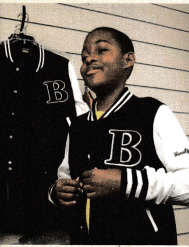
Marcus buys a varsity jacket from a clothing store in Arlington. The price of the jacket is $80 and the sales tax is 8%. What is the total cost of the jacket?
Texas Go Math Grade 7 Lesson 3.4 Answer Key 1

Step 1: Use a bar model to find the amount of the tax.
Draw a bar for the price of the jacket, $80. Divide it into 10 equal parts. Each part represents 10% of $80, or $8.
Then draw a bar that shows the sales tax: 8% of $80.
Texas Go Math Grade 7 Lesson 3.4 Answer Key 2
Because 8% is \(\frac{4}{5}\) of 10%, the tax is \(\frac{4}{5}\) of one part of the whole bar.
Each part of the whole bar is $8.
So, the sales tax is \(\frac{4}{5}\) of $8.
\(\frac{4}{5}\) × $8= $6.40
The sales tax is $6.40.

Step 2: To find the total cost of the jacket, add the price of the jacket and the sales tax.
Jacket price + Sales tax = Total cost
$80 + $6.40 = $86.40

Your Turn

Texas Go Math Grade 7 Answer Key Pdf Lesson 3.4 Question 1.
Sharon wants to buy a shirt that costs $20. The sales tax is 5%. How much is the sales tax? What is her total cost for the shirt? __________
Answer:
Sales tax amount = Original cost × Sales tax percentage
= 20 × 5%
= 20 × 0.05
= $1
Total cost = Original cost + Sales tax amount
= 20 + 1
= $21

Example 2

Terry deposits $200 into a bank account that earns 3% simple interest per year. What Is the total amount in the account after 2 years?

Step 1 Find the amount of interest earned in one year. Then calculate the amount of interest for 2 years.
Write 3% as a decimal: 0.03
Interest Rate × Initial Deposit = Interest for 1 year
0.03 × $200 = $6
Interest for 1 year × 2 years = Interest for 2 years
$6 × 2 = $12

Step 2: Add the interest for 2 years to the initial deposit to find the total amount in his account after 2 years.
Initial deposit + Interest for 2 years = Total
$200 + $12 = $212
The total amount in the account after 2 years is $212.

Reflect

Question 2.
Write an expression you can use to find the total amount in Terry’s account.
Answer:
Combine the 3 expressions from Example 2 to form 1 expression.
Total = Initial deposit + Initial deposit × Interest rate × 2 years

Your Turn

Question 3.
Ariane borrows $400 on a 4-year loan. She is charged 5% simple interest per year. How much interest is she charged for 4 years? What is the total amount she has to pay back? ____________________
Answer:
Find the amount of interest earned in one year. Then calculate the amount of interest for 4 years.
Write 4% is a decimal: 0.04
Interest for 1 year = Interest rate × Initial loan
= 0.04 × $400
= $16
Interest, for 4 years = Interest for 1 year × 1 years
= $16 × 4
= $64
Add the interest for 4 years to the initial loan to find the total amount she has to pay back.
Total amount = Initial loan + Interest for 4 years
= $400 + $64
= $164
$64 of interest is charged in 4 years.
The total amount she has to back is $464.

Go Math Grade 7 Answer Key Pdf Applications of Percent Question 4.
Samuel orders four DVDs from an online music store. Each DVD costs $9.99. He has a 20% discount code, and sales tax is 6.75%. What is the total cost of his order?
Answer:
Start with calculating the cost of 4 CDs.
$9.99 × 4 = $39.96
Now, calculate the sales tax, then the cost of the CDs with the applied sales tax
Sales tax = Cost of 4 CDs * Sales tax percentage
= $39.96 × 6.75%
= $39.96 × 0.0675
≈ $2.7
Cost with applied sales tax = Original cost + Sales tax
= $39.96 + $2.7
= $42.26
Having the cost with applied sales tax, we have to apply the 20% discount
Amount of discount = $42.26 × 20%
= $42.26 × 0.2
≈ $8.45

Total cost = $42.26 – $8.45
= $33.81

Texas Go Math Grade 7 Lesson 3.4 Guided Practice Answer Key

Question 1.
5% of $30 = ____________.
Answer:
Write percentage as decimals, then calculate the task.
5% = 0.05
$30 × 0.05 = $1.5

Question 2.
15% of $70 = _____________
Answer:
Write percentage as decimals, then calculate the task.
15% = 0.15
$70 × 0.15 = $10.5

Question 3.
0.4% of $100 = ______________________
Answer:
Write the percentage as decimals, then calculate the task.
0.4% = 0.004
$100 × 0.004 = $0.4

Go Math Grade 7 Lesson 3.4 Answer Key Question 4.
150% of $22 = ________________
Answer:
Write the percentage as decimaLs, then calculate the task.
150% = 1.5
$22 × 1.5 = $33

Question 5.
1% of $80 ___________________
Answer:
Write the percentage as decimals, then calculate the task.
1% = 0.01
$80 × 0.01 = $0.8

Question 6.
200% of $5 = _______________
Answer:
Write the percentage as decimals, then calculate the task.
200% = 2
$5 × 2 = $10

Question 7.
Brandon buys a radio for $43.99 in a state where the sales tax is 7%. (Example 1)
a. How much does he pay in taxes? _______________________________
Answer:
Sales tax amount = Original cost × Sales tax percentage
= $43.99 × 7%
= $43.99 × 0.07

b. What is the total Brandon pays for the radio? ______________________
Answer:
Total cost = Original cost + Sales tax amount
= $43.99 + $3.08
= $47.07

Question 8.
Luisa’s restaurant bill comes to $75.50, and she leaves a 15% tip. What is Luisa’s total restaurant bill? (Example 1)
Answer:
Tip amount = Bill × Tip percentage
= $73.50 × 15%
= $75.50 × 0.15
≈ 811.33
Total cost = Bill + Tip amount
= $75.50 + $11.33
= $86.83
Luisa’s total restaurant bill is $86.63.

Question 9.
Joe borrowed $2,000 from the bank at a rate of 7% simple interest per year. How much interest did he pay in 5 years? (Example 2)
Answer:
Find the amount of interest earned in one year. Then calculate the amount of interest for 5 years.
Write 7% as a decimal: 0.07
Interest for 1 year = Interest rate × InitiaI loan
= 0.07 × $2000
= $140
Interest for 5 years = Interest for 1 year × 5 years
= $140 × 5
= $700
He paid $700 of interest in 5 years.

Texas Go Math Grade 7 Lesson 3.4 Answer Key Question 10.
You have $550 in a savings account that earns 3% simple interest each year. How much will be ¡n your account in 10 years? (Example 2)
Answer:
Find the amount of interest earned in one year. Then calculate the amount of interest for 10 years.
Write 3% as a decimal: 0.03
Interest for 1 year = Interest rate × Initial amount.
= 0.03 × $550
= $16.5
Interest for 10 years – Interest for 1 year × 10 years
= $16.5 × 10
= $165
Add the interest, for 10 years to the initial amount to find the total amount on the account.
Total amount = Initial amount + Interest for 10 years
= $550 + $165
= $715
The balance on account will be $715.

Question 11.
Martin finds a shirt on sale for 10% off at a department store. The original price was $20. Martin must also pay 8.5% sales tax. (Example 3)
a. How much is the shirt before taxes are applied? ________________
Answer:
Apply the 10% sale on the original cost..
Discount amount = Original cost × Sale percentage
= $20 × 10%
= $20 × 0.1
= $2
Sale price = Original cost – Discount amount
= $20 – $2
= $18
The shirt before taxes are applied cost $18.

b. How much is the shirt after taxes are applied? ____________________
Answer:
Apply the sales tax to the cost obtained in a. subtask.
Sales tax amount = Sale price × Sales tax
= $18 × 8.5%
= $18 × 0.085
= $1.53
Total cost = Sale price + Sales tax amount
= $18 + $1.53
= $19.53
The shirt after taxes are applied costs $19.53.

Application of Percents Answer Key Texas Go Math Grade 7 Pdf Question 12.
Teresa’s restaurant bill comes to $29.99 before tax. If the sales tax is 6.25% and she tips the waiter 20%, what is the total cost of the meal? (Example 3)
Answer:
Calculate the sales tax separately, then calculate the tip. and then add the sales tax and the tip to the bill for the meal to find the total.
Sales tax: 0.0625 × $29.99 ≈ $1.87
Tip: 0.2 × 829.99 86
Total cost = Meal + Tip + Sales tax
= $29.99 + $6 + $1.87
= $37.86
Estimate the sales tax and tip. Sales tax is about 10% plus 20% for tip gives %30. Find 30 of the bill: 0.3 × $29.99 ≈ $9. Add this to the bill: $29.99 + $9 = $38.99. The total cost should be about $39.

Essential Question Check-In

Question 13.
How can you determine the total cost of an item including tax if you know the price of the item and the tax rate?
Answer:
First, calculate the Sales tax amount by multiplying Original cost by Sales tax.
Then calculate the Total cost by adding Original cost and Sales tax amount.

Texas Go Math Grade 7 Lesson 3.4 Independent Practice Answer Key

Question 14.
Emily’s meal costs $32.75 and Darren’s meal costs $39.88. Emily treats Darren by paying for both meals, and leaves a 14% tip. Find the total cost.
Answer:
The tip rate is 11%.
The total cost will be sum of the meal and the tip.
Meal: $32.75 + $39.88 = $72.63
Tip: $72.63 × 0.14 = $10.17
Total cost: $72.63 + $10.17 = $82.8
The total cost is $82.8.

Question 15.
The Jayden family eats at a restaurant that is having a 15% discount promotion. Their meal costs $78.65, and they leave a 20% tip. If the tip applies to the cost of the meal before the discount, what is the total cost of the meal?
Answer:
The total cost will be sum of the tip before discount and the meal with the discount.
The tip rate is 20%.
The discount is 15%.
Tip: $78.65 × 0.2 = $15.73
Discount : $78.65 × 0. 15 = $11 .80
Meal with discount: $78.05 – $11.80 = $66.85
Total cost: $66.85 + $15.73 = $82.58
The total cost of the meal is $82.58.

Go Math 7th Grade Answer Key Pdf Lesson 3.4 Question 16.
A jeweler buys a ring from a jewelry maker for $125. He marks up the price by 135% for sale in his store. What is the selling price of the ring with 7.5% sales tax?
Answer:
The markup rate is 135%.
The sales tax is 7.5%.
The selling price will be the sum of calculating sales tax and the markup price separately.
Sales lax: $125 × 0.075 = $9.38
Markup price: $125 × 1.35 = $168.75
Selling Price: $168.75 + $9.38 = $178.13
The selling price of the ring is $178.13.

Question 17.
Luis wants to buy a skateboard that usually sells for $79.99. All merchandise is discounted by 12%. What is the total cost of the skateboard if Luis has to pay a state sales tax of 6.75%?
Answer:
The discount is 12%.
The sales tax is 6.75%.
The total cost will be the sum of the discounted price and sales tax on the discounted price.
Discount : $79.99 × 0.12 = $9.60
Discounted price: $79.99 – $9.60 = $70.39
Sales tax: $70.39 × 0.0675 = $4.75
Total cost: $70.39 + $4.75 = $75.14
The total cost of the skateboard is $75.14.

Question 18.
Kedar earns a monthly salary of $2,200 plus a 3.75% commission on the amount of his sales at a men’s clothing store. What would he earn this month if he sold $4,500 in clothing? Round to the nearest cent.
Answer:
The commission is 75%.
Kedar will earn the sum of his monthly salary and the commission of his sales.
Commission: $4,500 × 0.0375 = $168.75
Total salary: $2.200 + $168.75 = $2,368.75
Kedar would earn $2,368.75 this month.

Question 19.
Danielle earns a 7.25% commission on everything she sells at the electronics store where she works. She also earns a base salary of $750 per week. How much did she earn last week if she sold $4,500 in electronics merchandise? Round to the nearest cent.
Answer:
The commission is 7,25%.
Danielle will earn the sum of her weekly salary and the commission of her sales.
Commission: $4,500 × 0.0725 = $326.25
Total salary: $750 + $326.25 = $1,076.25
Danielle earned $1.076.25 last week.

Texas Go Math Grade 7 Answers Application of Percent Question 20.
Francois earns a weekly salary of $475 plus a 5.5% commission on sales at a gift chop. How much would he earn in a week if he sold $700 in goods? Round to the nearest cent.
Answer:
The commission is 5.5%.
Francois would earn the sum of his weekly salary and the commission of his sales.
Commission: $700 × 0.055 = $38.50
Total salary: $700 + $38.50 = $738.50
Francois would earn $738.50 in a week.

Question 21.
Sandra is 4 feet tall. Pablo is 10% taller than Sandra, and Michaela ¡s 8% taller than Pablo. a. Explain how to find Michaela’s height with the given information.
Answer:
First find Pablo’s height by applying 10% increase on Sandra’s height
Then, find Michaela’s height by applying 8% increase on Pablo’s height
Pablo: 4ft + 4 ft × 0.1 = 4.4 ft
Michaela: 4.4 ft + 4.4 ft × 0.08 = 4.752 ft
Michaela is 4752 ft tall.

b. What is Michaela’s approximate height in feet and inches?
Answer:
Convert the decimal part of her height to inches
1 ft = 12 in
0.752 ft = 0.752 × 12 in ≈ 9 in
Michaela is 4 ft 9 in tall.

Question 22.
Eugene wants to buy jeans at a store that is offering a $10 discount on every item. The tag on the jeans is marked 50% off. The original price is $49.98.
a. Find the final cost if the 50% discount is applied before the $10 discount.
Answer:
10$ discount: $49.98 – $10 = $39.98
Total cost: $39.98 = $39.98 × 0.5 = $19.99
The total cost is $19.99

b. Find the final cost if the $10 discount is applied before the 50% discount.
Answer:
50% discount: $49.98 – $49.98 × 0.5 = $24.99
Total cost: $24.99 – $10 = $14.99
The total cost is $14.99

Texas Go Math Grade 7 Lesson 3.4 Applications of Percents Question 23.
Multistep Eric downloads the coupon shown and goes shopping at Gadgets Galore, where he buys a digital camera for $95 and an extra battery for $15.99.
Texas Go Math Grade 7 Lesson 3.4 Answer Key 3
a. What is the total cost if the coupon is applied to the digital camera?
Answer:
First, apply the discount on the digital camera. Total cost is the sum of the discounted camera and the extra battery.
Discounted camera: $95 – $95 × 0.1 = $95 – $9.50 = $85.50
Total cost: $85.50 + $15.99 = $101.49
The total cost is $101.49.

b. What is the total cost if the coupon is applied to the extra battery?
Answer:
First, apply the discount on the extra battery. Total cost is the sum of the camera and the discounted battery.
Discounted battery: $15.99 – $15.99 × 0.1 = $15.99 – $1.60 = $14.39
Total cost: $95 + $14.39 = $109.39
The total cost is $109.39.

c. To which item should Eric apply the discount? Explain.
Answer:
Eric should apply the discount on the camera as the total cost is lower that way.

d. Eric has to pay 8% sales tax after the coupon is applied. How much is his total bill if he applies the coupon to the digital camera?
Answer:
Apply the sales tax on the total cost from a. subtask.
Sales tax: $101.49 × 0.08 = $8.12
Total cost: $101.49 + $8.12 = $109.61
His total bill is $109.61.

Question 24.
Two stores are having sales on the same shirts. The sale at Store 1 is “2 shirts for $22” and the sale at Store 2 is “Each $12.99 shirt is 10% off”.
a. Explain how much will you save by buying at Store 1.
Answer:
First, apply the discount out the shirt and then multiply by 2.
$12.99 -$12.99 × 0.1 = $11.70
Total cost: $11.70 × 2 = $23.40
You will save $1.40 buying at Store 1.

b. If Store 3 has shirts originally priced at $20.98 on sale for 55% off, does it have a better deal than the other stores? Justify your answer.
Answer:
First, apply the discount on the shirt and then multiply by 2.
$20.9 – $20.9 × 0.55 = $2o.9 – $11.54 = $9.44
Total cost of 2 shirts: $9.44 × 2 = $18.88
The third store has the best deals of all stores, as the price of the T-shirt is the lowest.

H.O.T. Focus On Order Thinking

Question 25.
Analyze Relationships Marcus can choose between a monthly salary of $1,500 plus 5.5% of sales or $2,400 plus 3% of sales. He expects sales between $5,000 and $10,000 a month. Which salary option should he choose? Explain.
Answer:
We will calculate both salaries by first calculating sales commission and then adding to the base of the monthly salary.
Sales are expected to be between 5000 and 1000. We calculate both ends of the expected sales.
First salary option:
Base = $1500
Sales percentage = 5.5%
$5000 × 0.055 = $275
$10000 × 0.055 = $550
$1500 + $275 ≤ Salary ≤ $1500 + $550
$1775 ≤ Salary ≤ $2050

Second salary option:
Base = $2400
Sales percentage = 3%
$5000 × 0.03 = $150
$10000 × 0.03 = $300
$2400 + $150 ≤ Salary ≤ $2400 + $300
$2550 ≤ Salary ≤ $2700
It is obvious 110W that the second salary option would be greater than the first. Thus, Marcus should choose the second salary option.

Go Math 7th Grade Lesson 3.4 Answer Key Question 26.
Multistep In chemistry class, Bob recorded the volume of a liquid as 13.2 mL. The actual volume was 13.7 mL. Use the formula to find the percent error of Bob’s measurement to the nearest tenth of a percent.
Percent Error = \(\frac{\mid \text { Experimental Value }-\text { Actual Value| }}{\text { Actual Value }}\) × 100%
Answer:
Insert given values into the formula
Experimental value = 13.2 mL
Texas Go Math Grade 7 Lesson 3.4 Answer Key 4

Texas Go Math Grade 7 Lesson 3.4 Answer Key Applications of Percent Read More »

Texas Go Math Grade 7 Module 8 Answer Key Equations and Inequalities

Refer to our Texas Go Math Grade 7 Answer Key Pdf to score good marks in the exams. Test yourself by practicing the problems from Texas Go Math Grade 7 Module 8 Answer Key Equations and Inequalities.

Texas Go Math Grade 7 Module 8 Answer Key Equations and Inequalities

Essential Question
How can you use equations and Inequalities to solve real-world problems?
Texas Go Math Grade 7 Module 8 Answer Key 1

Texas Go Math Grade 7 Module 8 Are You Ready? Answer Key

Complete these exercises to review skills you will need for this chapter.
Texas Go Math Grade 7 Module 8 Answer Key 2

Solve each equation, using inverse operations.

Module 8 Answer Key 7th Grade Question 1.
9w = -54 _______
Answer:
Divide both sides by 9.
Texas Go Math Grade 7 Module 8 Answer Key 5

Question 2.
b – 12 = 3 _______
Answer:
Add 12 to both sides b – 12 + 12 = 3 + 12
b = 15

Question 3.
\(\frac{n}{4}\) = -11 ____
Answer:
Multiply both sides by 4.
Texas Go Math Grade 7 Module 8 Answer Key 6

Graph each number on the number line.

Texas Go Math Grade 7 Module 8 Answer Key 3

Question 4.
3
Answer:
Texas Go Math Grade 7 Module 8 Answer Key 7
3

7th Grade Equations and Inequalities Answer Key Question 5.
-9
Answer:
Texas Go Math Grade 7 Module 8 Answer Key 8
-9

Question 6.
7
Answer:
Texas Go Math Grade 7 Module 8 Answer Key 9
7

Question 7.
-3
Answer:
Texas Go Math Grade 7 Module 8 Answer Key 10
-3

Question 8.
4p > 20 ______
Answer:
Divide both sides by 4.
Texas Go Math Grade 7 Module 8 Answer Key 11

Math Equations 7th Grade Module 8 Review Answer Key Question 9.
m – 7 ≤ 3 ______
Answer:
Add 7 to both sides.
m + 7 + 7 ≤ 3 + 7
m ≤ 3 + 7
m ≤ 10

Question 10.
\(\frac{S}{-2}\) < 9
Answer:
Multiply both sides by -2. We are multiplying by a negative number, so we have to reverse the direction of the inequality
Texas Go Math Grade 7 Module 8 Answer Key 12

Question 11.
r + 6 ≤ -7 ____
Answer:
subtract 6 from both sides.
r + 6 – 6 ≤ -7 – 6
r ≤ -13

Question 12.
\(\frac{h}{4}\) > -5 _____
Answer:
Multiply both sides by 4.
Texas Go Math Grade 7 Module 8 Answer Key 13
Answer:

Equations and Inequalities for 7th Graders Question 13.
-y ≤ 2 ________
Answer:
Multiply both sides by -1 We are multiplying by a negative number, so we have to reverse the direction of the inequality.
-y . (-1) ≤ 2 . (-1)
y ≤ -2

Texas Go Math Grade 7 Module 8 Reading Start-Up Answer Key

Visualize Vocabulary

Use the ✓ words to complete the graphic. You may put more than one word in each box.

Texas Go Math Grade 7 Module 8 Answer Key 4

Understand Vocabulary

Complete each sentence, using the review words.

Question 1.
A value of the variable that makes the equation true is a ____
Answer:
Solution.

Module 8 Test Answers Math 7th Grade Question 2.
The set of all whole numbers and their opposites are ______
Answer:
Integers.

Question 3.
An ___________________________ is an expression that contains at least one variable.
Answer:
Equation.

Texas Go Math Grade 7 Module 8 Answer Key Equations and Inequalities Read More »

Texas Go Math Grade 7 Lesson 3.2 Answer Key Percent Increase and Decrease

Refer to our Texas Go Math Grade 7 Answer Key Pdf to score good marks in the exams. Test yourself by practicing the problems from Texas Go Math Grade 7 Lesson 3.2 Answer Key Percent Increase and Decrease.

Texas Go Math Grade 7 Lesson 3.2 Answer Key Percent Increase and Decrease

Example 1
Amber got a raise, and her hourly wage increased from $8 to $9.50. What is the percent increase?
Step 1: Find the amount of change.
Amount of Change = Greater Value – Lesser Value
= 9.50 – 8.00 Substitute values
= 1.50 Subtract

Step 2: Find the percent increase. Round to the nearest percent.
Percent Change = \(\frac{\text { Amount of Change }}{\text { Original Amount }}\)
= \(\frac{1.50}{8.00}\) Substitute values
= 0.1875 Divide.
≈ 19% Write as a percent and round.

Reflect

Question 1.
What does a 100% increase mean?
Answer:
A 100% increase means that a value has doubled.

Your Turn

Go Math Answer Key Grade 7 Lesson 3.2 Answer Key Question 2.
The price of a pair of shoes increases from $52 to $64. What is the percent increase to the nearest percent?
Answer:
Find the amount of change.
Amount of Change = Greater Value – Lesser value
= 64 – 52
= 12
Find the percent increase. Round to the nearest percent
Percent Change = \(\frac{\text { Amount of Change }}{\text { Original Amount }}\)
= \(\frac{12}{52}\)
= 0.2308
= 23%

Example 2

David moved from a house that is 89 miles away from his workplace to a house that is 51 miles away from his workplace. What is the percent decrease in the distance from his home to his workplace?
Step 1: Find the amount of change.
Amount of Change = Greater Value – Lesser Value
= 89 – 51 Substitute values.
= 38 Subtract.

Step 2: Find the percent decrease. Round to the nearest percent.
Percent Change = \(\frac{\text { Amount of Change }}{\text { Original Amount }}\)
= \(\frac{38}{89}\) Substitute values
≈ 0.427 Divide.
≈ 19% Write as a percent and round.

Reflect

Question 3.
Critique Reasoning David considered moving even closer to his workplace. He claims that if he had done so, the percent of decrease would have been more than 100%. Is David correct? Explain your reasoning.
Answer:
David is not correct. Distance of workplace is an absolute value If the percent of decrease would be more than 100%, that would mean the distance would be negative. That does not make any sense since the distance is an absolute value which is always positive.

Your Turn

Question 4.
The number of students in a chess club decreased from 18 to 12. What is the percent decrease? Round to the nearest percent. ___________
Answer:
Find the amount of change.
Amount of Change = Greater Value – Lesser value
= 18 – 12
= 6
Find the percent decrease. Round to the nearest percent
Percent Change = \(\frac{\text { Amount of Change }}{\text { Original Amount }}\)
= \(\frac{6}{18}\)
= 0.3
= 33%

Texas Go Math Grade 7 Answer Key Pdf Percent Error Question 5.
Officer Brimberry wrote 16 tickets for traffic violations last week, but only 10 tickets this week. What is the percent decrease? ______________
Answer:
Find the amount of change.
Amount of Change = Greater Value – Lesser value
= 16 – 10
= 6
Find the percent decrease. Round to the nearest percent
Percent Change = \(\frac{\text { Amount of Change }}{\text { Original Amount }}\)
= \(\frac{6}{16}\)
= 0.375
= 38%

Reflect

Question 6.
Why will the percent of change always be represented by a positive number?
Answer:
Because it is just the measure of change. If there is a positive change, you say there is an increase of a certain percentage and if there is a negative change, you say there is fall by a certain percentage. For example: If your weight increases by 10 kilos and if you are 40 kilos now, then you say your weight has increased by 25% which is positive obviously. If your weight decreases by 10 kilos, then you say your weight has decreased or reduced by 25% rather than saying your weight has been changed by -10%. So it is just a matter of using the words and numbers in an appropriate manner.

Question 7.
Draw Conclusions If an amount of $100 in a savings account increases by 10%, and then increases by 10% again, is that the same as increasing by 20%? Explain.
Answer:
It is not the same value. The first increase was by 10% of 100. that is $10.
The second increase was 10% of $100+$10 = $110. that is $11. $110 + $11 = $121
A straight increase of 20% is $20. $100 + $20 = $120
$121 ≠ $120

Your Turn

A TV has an original price of $499. Find the new price after the given percent of change.

Question 8.
10% increase ___________
Answer:
First. multiply TV’s price with the percentage expressed in decimals.
499 × 10% = 499 × 0.1
= $19.9
Now. since it was an increase, add the obtained value to the TV’s price.
$499 + $49.9 = $548.9
New price of the TV is $548.9.

Question 9.
30% decrease _____________
Answer:
First, multiply TV’s price with the percentage expressed in decimals.
499 × 30% = 199 × 0.3
= $149.7
Now, since it was an decrease, subtract the obtained value from the TV’s price.
$499 – $149.7 = $319.3
New price of the TV is $349.3.

Texas Go Math Grade 7 Lesson 3.2 Guided Practice Answer Key

Find each percent increase. Round to the nearest percent. (Example 1)

Question 1.
From $5 to $8 _______________________
Answer:
Find the amount of change.
Amount of Change = Greater Value – Lesser value
= 8 – 5
= 3
Find the percent increase. Round to the nearest percent
Percent Change = \(\frac{\text { Amount of Change }}{\text { Original Amount }}\)
= \(\frac{3}{5}\)
= 0.6
= 60%

Lesson 3.2 Percentage Error Answer Key Question 2.
From 20 students to 30 students _____________
Answer:
Find the amount of change.
Amount of Change = Greater Value – Lesser value
= 30 – 20
= 10
Find the percent increase. Round to the nearest percent
Percent Change = \(\frac{\text { Amount of Change }}{\text { Original Amount }}\)
= \(\frac{10}{20}\)
= 0.5
= 50%

Question 3.
From 86 books to 150 books ______________.
Answer:
Find the amount of change.
Amount of Change = Greater Value – Lesser value
= 150 – 86
= 64
Find the percent increase. Round to the nearest percent
Percent Change = \(\frac{\text { Amount of Change }}{\text { Original Amount }}\)
= \(\frac{64}{86}\)
= 0.7441
= 74%

Question 4.
From $3.49 to $3.89 _______________
Answer:
Find the amount of change.
Amount of Change = Greater Value – Lesser value
= 3.89 – 3.49
= 0.4
Find the percent increase. Round to the nearest percent
Percent Change = \(\frac{\text { Amount of Change }}{\text { Original Amount }}\)
= \(\frac{0.4}{3.49}\)
= 0.1146
= 11%

Question 5.
From 13 friends to 14 friends _______________
Answer:
Find the amount of change.
Amount of Change = Greater Value – Lesser value
= 14 – 13
= 1
Find the percent increase. Round to the nearest percent
Percent Change = \(\frac{\text { Amount of Change }}{\text { Original Amount }}\)
= \(\frac{1}{13}\)
= 0.0769
= 8%

Question 6.
From 5 miles to 16 miles ________________
Answer:
Find the amount of change.
Amount of Change = Greater Value – Lesser value
= 16 – 5
= 11
Find the percent increase. Round to the nearest percent
Percent Change = \(\frac{\text { Amount of Change }}{\text { Original Amount }}\)
= \(\frac{11}{5}\)
= 2.2
= 220%

Question 7.
Nathan usually drinks 36 ounces of water per day. He read that he should drink 64 ounces of water per day. If he starts drinking 64 ounces, what is the percent increase? Round to the nearest percent. (Example 1)
Answer:
Find the amount of change.
Amount of Change = Greater Value – Lesser value
= 64 – 36
= 28
Find the percent increase. Round to the nearest percent
Percent Change = \(\frac{\text { Amount of Change }}{\text { Original Amount }}\)
= \(\frac{28}{36}\)
= 0.7
= 78%

Find each percent decrease. Round to the nearest percent. (Example 2)

Question 8.
From $80 to $64 ______________
Answer:
Find the amount of change.
Amount of Change = Greater Value – Lesser value
= 80 – 64
= 16
Find the percent decrease. Round to the nearest percent
Percent Change = \(\frac{\text { Amount of Change }}{\text { Original Amount }}\)
= \(\frac{16}{80}\)
= 0.2
= 20%

Go Math 7th Grade Pdf Percent Increase and Decrease Question 9.
From 95 °F to 68 °F ________________
Answer:
Find the amount of change.
Amount of Change = Greater Value – Lesser value
= 95 – 68
= 27
Find the percent decrease. Round to the nearest percent
Percent Change = \(\frac{\text { Amount of Change }}{\text { Original Amount }}\)
= \(\frac{27}{95}\)
= 0.2842
= 28%

Question 10.
From 90 points to 45 points ____________
Answer:
Find the amount of change.
Amount of Change = Greater Value – Lesser value
= 90 – 45
= 45
Find the percent decrease. Round to the nearest percent
Percent Change = \(\frac{\text { Amount of Change }}{\text { Original Amount }}\)
= \(\frac{45}{90}\)
= 0.5
= 50%

Question 11.
From 145 pounds to 132 pounds ______________
Answer:
Find the amount of change.
Amount of Change = Greater Value – Lesser value
= 145 – 132
= 13
Find the percent decrease. Round to the nearest percent
Percent Change = \(\frac{\text { Amount of Change }}{\text { Original Amount }}\)
= \(\frac{13}{145}\)
= 0.0897
= 9%

Question 12.
From 64 photos to 21 photos _____________
Answer:
Find the amount of change.
Amount of Change = Greater Value – Lesser value
= 64 – 21
= 43
Find the percent decrease. Round to the nearest percent
Percent Change = \(\frac{\text { Amount of Change }}{\text { Original Amount }}\)
= \(\frac{43}{64}\)
= 0.6719
= 67%

Question 13.
From 16 bagels to 0 bagels _______________
Answer:
Find the amount of change.
Amount of Change = Greater Value – Lesser value
= 16 – 0
= 16
Find the percent decrease. Round to the nearest percent
Percent Change = \(\frac{\text { Amount of Change }}{\text { Original Amount }}\)
= \(\frac{16}{16}\)
= 1
= 100%

Question 14.
Over the summer, Jackie played video games 3 hours per day. When school began in the fall, she was only allowed to play video games for half an hour per day. What is the percent decrease? Round to the nearest percent. (Example 2)
Answer:
Find the amount of change.
Amount of Change = Greater Value – Lesser value
= 3 – 0.5
= 2.5
Find the percent decrease. Round to the nearest percent
Percent Change = \(\frac{\text { Amount of Change }}{\text { Original Amount }}\)
= \(\frac{2.5}{3}\)
= 0.83
= 83%

Find the new amount given the original amount and the percent of change. (Example 3)

Question 15.
$9; 10% increase ____________________
Answer:
Find the amount of change.
$9 × 10% = $9 × 0.1
= $0.9
Now, since it was an increase, add the obtained value to the starting value.
$9 + $0.9 = $9.9

Go Math Grade 7 Lesson 3.2 Answer Key Question 16.
48 cookies; 25% decrease _______________
Answer:
Find the amount of change.
48 × 25% = 48 × 0.25
=12
Now, since it was a decrease, subtract the obtained value from the starting value.
48 – 12 = 36 cookies

Question 17.
340 pages; 20% decrease _____________
Answer:
Find the amount of change.
340 × 20% = 340 × 0.2
= 68
Now, since it was a decrease, subtract the obtained value from the starting value.
340 – 68 = 272 pages

Question 18.
28 members; 50% increase ________________
Answer:
Find the amount of change.
28 × 50% = 28 × 0.5
= 14
Now, since it was an increase, add the obtained value to the starting value
28 + 14 = 42 members

Question 19.
$29,000; 4% decrease ________________
Answer:
Find the amount of change.
$29000 × 4% = $29000 × 0.04
= $1160
Now, since it was a decrease, subtract the obtained value from the starting value
$29000 – $1160 = $27840

Question 20.
810 songs; 130% increase _________________
Answer:
Find the amount of change.
810 × 130% = 810 × 1.3
= 1053
Now, since it was an increase, add the obtained value to the starting value.
810 + 1053 = 1863 songs

Question 21.
Adam currently runs about 20 miles per week, and he wants to increase his weekly mileage by 30%. How many miles will Adam run per week? (Example 3)
Answer:
Find the amount of change.
20 × 30% = 20 × 0.3
= 6
Now, since it was an increase, add the obtained value to the starting value.
20 + 6 = 26 miles
Adam will have to run 26 miles per week.

Essential Question Check-In

Question 22.
What process do you use to find the percent change of a quantity?
Answer:
First, we find the amount of change by subtracting the lesser value from the greater value.
Amount of Change = Greater Value – Lesser Value
Then, we divide the amount of change by the original amount
Percent Change = \(\frac{\text { Amount of Change }}{\text { Original Amount }}\)

Texas Go Math Grade 7 Lesson 3.2 Independent Practice Answer Key

Question 23.
Complete the table.
Texas Go Math Grade 7 Lesson 3.2 Answer Key 1
Answer:
Texas Go Math Grade 7 Lesson 3.2 Answer Key 3
Bike:
Find the amount of change.
Amount of Change = Greater Value – Lesser value
= 110 – 96
= 14
Find the percent decrease (Original Price greater than New Price) Round to the nearest percent.
Percent Change = \(\frac{\text { Amount of Change }}{\text { Original Amount }}\)
= \(\frac{14}{110}\)
≈ 0.1273
≈ 13%

Scooter:
Find the amount of change.
Amount of Change = Greater Value – Lesser value
= 56 – 45
= 11
Find the percent increase (Original Price lesser than New Price). Round to the nearest percent.
Percent Change = \(\frac{\text { Amount of Change }}{\text { Original Amount }}\)
= \(\frac{11}{45}\)
= 0.24
= 24%

Tennis Racket:
Find the amount of change
79 × 5% = 75 × 0.05
= 3.95
Now, since it was an increase, add the obtained value to the starting value
$79 + $3.95 = $82.95

Skis:
Find the amount of change.
580 × 25% = 580 × 0.25
= 145
Now, since it was a decrease, subtract the obtained value from the starting value.
$580 – $145 = $435

Go Math Lesson 3.2 Answer Key 7th Grade Question 24.
Multiple Representations The bar graph shows the number of hurricanes in the Atlantic Basin from 2006-2011.
Texas Go Math Grade 7 Lesson 3.2 Answer Key 2
a. Find the amount of change and the percent of decrease in the number of hurricanes from 2008 to 2009 and from 2010 to 2011. Compare the amounts of change and percents of decrease.
Answer:
2008.- 2009.
2008. – 8 hurricanes
2009. – 3 hurricanes
It is an obvious decrease.
Find the amount of change.
Amount of Change = Greater Value – Lesser value
= 8 – 3
= 5
Find the percent decrease. Round to the nearest percent.
Percent Change = \(\frac{\text { Amount of Change }}{\text { Original Amount }}\)
= \(\frac{5}{8}\)
= 0.625
≈ 63%

2010.- 2011.
2010. – 12 hurricanes
2011. – 7 hurricanes
It is, again, an obvious decrease.
Find the amount of change.
Amount of Change = Greater Value – Lesser value
= 12 – 7
= 5
Find the percent decrease. Round to the nearest percent.
Percent Change = \(\frac{\text { Amount of Change }}{\text { Original Amount }}\)
= \(\frac{5}{12}\)
= 0.416
≈ 42%
Amounts of change are the same, but the first percent change is greater because the original amount is lesser.

b. Between which two years was the percent of change the greatest? What was the percent of change during that period?
Answer:
We conclude that the greatest percentage change is between 2008. – 2009. The percent of change during that period was 63%

Question 25.
Represent Real-World Problems Cheese sticks that were previously priced at “5 for $1” are now “4 for $1”.
a. Find the percent decrease in the number of cheese sticks you can buy for $1.
Answer:
Find the amount of change.
Amount of Change = Greater Value – Lesser value
= 5 – 4
= 1
Find the percent decrease. Round to the nearest percent.
Percent Change = \(\frac{\text { Amount of Change }}{\text { Original Amount }}\)
= \(\frac{1}{5}\)
= 0.2
20%
You can now buy 20% less cheese sticks for $1 than before.

b. Find the percent increase in the price per cheese stick.
Answer:
Price before = $1 ÷ 5 = $0.2
Price now = $1 ÷ 4 = $0.25
Find the amount of change.
Amount of Change = Greater Value — Lesser value
= 2.5 – 2
= 0.5
Find the percent increase. Round to the nearest percent.
Percent Change = \(\frac{\text { Amount of Change }}{\text { Original Amount }}\)
= \(\frac{0.5}{2}\)
= 0.25
25%

Lesson 3.2 Percent of Change Answer Key 7th Grade Question 26.
Percent error calculations are used to determine how close to the true values, or how accurate, experimental values really are. The formula is similar to finding percent of change.
Percent Error = \(\frac{\mid \text { Experimental Value }-\text { Actual Value| }}{\text { Actual Value }}\) × 100%
In chemistry class, Charlie records the volume of a liquid as 13.3 milliliters. The actual volume is 1 3.6 milliliters. What is his percent error? Round to the nearest percent. __________________________________
Answer:
Experimental Value = 13.3 millimeters
Actual Value = 13.6 millimeters
Use the given formula to calculate the Percent Error
Texas Go Math Grade 7 Lesson 3.2 Answer Key 4

H.O.T. Focus On Higher Order Thinking

Question 27.
Look for a Pattern Leroi and Sylvia both put $100 in a savings account. Leroi decides he will put in an additional $10 each week. Sylvia decides to put in an additional 10% of the amount in the account each week.
a. Who has more money after the first additional deposit? Explain.
Answer:
Lerol put $10. now she has $100 + $10 = $100.
Sylvia put 10% × $100 = $10, now she has $100 + $10 = $110.
Conclusion: They both have the same amount of money after the first additional deposit.

b. Who has more money after the second additional deposit? Explain.
Answer:
Since Lerol adds again $10. and Sylvia 10%. it is obvious that Sylvia now has more money. because she adds 10% × $100 = $11.
$11 > $10

c. How do you think the amounts in the two accounts will compare after a month? A year?
Answer:
Obviously, Sylvia will have more money as the time progresses, because she keeps adding a greater amount with each month. while Lerol always adds the same amount of money.

Question 28.
Critical Thinking Suppose an amount increases by 100%, then decreases by 100%. Find the final amount would the situation change if the original increase was 150%? Explain your reasoning.
Answer:
Let x be the amount of money.
First, increase its value by 100%.
x + 100% × x = x + x = 2x
Now, decrease the obtained value by 100%.
2x – 100% × 2x = 2x – 2x = 0
The final, amount is 0.
Now, calculate if the original increase would be 150% followed by the same decrease.
x + 150% × x = x + 1.5x = 2.5x
2.5x – 100% × 2.5x = 2.5x – 2.5x = 0
We can conclude that no matter how many percent the amount increases, if it decreases by 100% after, it will equal 0.

Question 29.
Look for a Pattern Ariel deposited $100 into a bank account. Each Friday she will withdraw 10% of the money in the account to spend. Ariel thinks her account will be empty after 10 withdrawals. Do you agree? Explain.
Answer:
That is not correct. Actually, that way she would never empty her bank account.
The first month she would withdraw 10% × $100 = $10
She now has $100 – $10 = $90 on her account.
Next month she would withdraw 10% × $90 = $9
She now has $90 – $9 = $81 on her account.
The amount on her account would decrease more slowly with each withdrawal but would reach $0.

Texas Go Math Grade 7 Lesson 3.2 Answer Key Percent Increase and Decrease Read More »

Texas Go Math Grade 7 Lesson 3.1 Answer Key Converting Between Measurement Systems

Refer to our Texas Go Math Grade 7 Answer Key Pdf to score good marks in the exams. Test yourself by practicing the problems from Texas Go Math Grade 7 Lesson 3.1 Answer Key Converting Between Measurement Systems.

Texas Go Math Grade 7 Lesson 3.1 Answer Key Converting Between Measurement Systems

Texas Go Math Grade 7 Lesson 3.1 Explore Activity Answer Key

The table shows equivalencies between the customary and metric systems. You can use these equivalencies to convert a measurement ¡n one system to a measurement in the other system.

Texas Go Math Grade 7 Lesson 3.1 Answer Key 1

Most conversions are approximate, as indicated by the symbol ≈.

The length of a sheet of paper is 11 inches. What is this length in centimeters?

A. You can use a bar diagram to solve this problem. Each part represents 1 inch.
1 inch ________ centimeter(s)
Texas Go Math Grade 7 Lesson 3.1 Answer Key 2

B. How does the diagram help you solve the problem?

C. 11 inches = ________ centimeters

Reflect

Question 1.
Communicate Mathematical Ideas Suppose you wanted to use a diagram to convert ounces to grams. Which unit would the parts in your diagram represent?
Answer:
The parts in my diagram would represent ounces.

Your Turn

Lesson 3.1 Converting Between Measurement Systems Answer Key Question 2.
6 quarts ≈ ___________ liters
Answer:
1 quart ≈ 0.946 liter.
Write the conversion factor as ratio: \(\frac{0.946 \text { liter }}{1 \text { quart }}\)
6 quarts × \(\frac{0.946 \text { liter }}{1 \text { quart }}\) = 5.736 liters

Question 3.
14 feet ≈ ____________ meters
Answer:
1 foot ≈ 0.305 meter.
Write the conversion factor as ratio: \(\frac{0.305 \text { meter }}{1 \text { foot }}\)
14 feet × \(\frac{0.305 \text { meter }}{1 \text { foot }}\) ≈ 4.27 meters

Question 4.
255.6 grams ≈ ___________ ounces
Answer:
1 ounce ≈ 28.4 grams
Write the conversion factor as ratio: \(\frac{1 \text { ounce }}{28.4 \text { grams }}\)
255.6 grams × \(\frac{1 \text { ounce }}{28.4 \text { grams }}\) ≈ 9 ounce

Question 5.
7 liters ≈ __________ quarts
Answer:
1 quart ≈ 0.946 liter.
Write the conversion factor as ratio: \(\frac{1 \text { quart }}{0.946 \text { liter }}\)
7 liters × \(\frac{1 \text { quart }}{0.946 \text { liter }}\) ≈ 7.4 quarts

Reflect

Question 6.
Error Analysis Yolanda found the area of Bob’s driveway in square meters as shown. Explain why Yolanda’s answer is incorrect.
Texas Go Math Grade 7 Lesson 3.1 Answer Key 3
Answer:
Yolanda’s answer is incorrect because she multiplied square feet by a regular meter-to-foot ratio.

Your Turn

Converting within Measurement Systems Lesson 7.3 Answer Key Question 7.
A flower bed is 2 meters wide and 3 meters long. What is the area of the flower bed in square feet? Round intermediate steps and your answer to the nearest hundredth.
__________ square feet
Answer:
First, convert flower bed measurements to feet
1 foot ≈ 0.305 meter
Texas Go Math Grade 7 Lesson 3.1 Answer Key 7
Length ≈ 9.84 feet
Width ≈ 6.56 feet

Find the area.
Area = Length × Width
= 9.84 × 6.56
= 65.55 square feet

Texas Go Math Grade 7 Lesson 3.1 Guided Practice Answer Key

Complete each diagram to solve the problem. (Explore Activity)

Question 1.
Kate ran 5 miles. How far did she run in kilometers?
5 miles = __________________ kilometers
Texas Go Math Grade 7 Lesson 3.1 Answer Key 4
Answer:
First, complete the diagram. Then, with the help of a diagram convert units
5 × 1.61 = 8.05
5 miles ≈ 8.05 kilometres
Texas Go Math Grade 7 Lesson 3.1 Answer Key 8

Question 2.
Alex filled a 5-gallon jug with water. How many liters of water are in the container?
5 gallons ≈ _________________ liters
Texas Go Math Grade 7 Lesson 3.1 Answer Key 4
Answer:
First, complete the diagram. Then, with the help of a diagram convert units
5 × 3.79 = 18.95
5 gallons ≈ 18.95 liters
Texas Go Math Grade 7 Lesson 3.1 Answer Key 9

Use a conversion factor to convert each measurement. (Example 1 and 2)

Question 3.
A ruler is 12 inches long. What is the length of this ruler in centimeters?
_________________ centimeters
Answer:
1 in ≈ 2.54 centimeter.
Texas Go Math Grade 7 Lesson 3.1 Answer Key 10
The ruler is 30.48 centimeters long.

Lesson 3.1 Worksheet Go Math Answer Key Grade 7 Question 4.
A kitten weighs 4 pounds. What is the approximate mass of the kitten?
_________________ kilograms
Answer:
1 pound ≈ 0.454 kilograms
Write the conversion factor as a ratio: \(\frac{0.454 \text { kilograms }}{1 \text { pound }}\)
4 pounds × \(\frac{0.454 \text { kilograms }}{1 \text { pound }}\) ≈ 1.816 kilogram
A kitten weighs 1.816 kilograms.

Use a proportion to convert each measurement. (Example 2)

Question 5.
20 yards ≈ ____________ meters
Answer:
1 yard ≈ 0.914 meter.
Write the conversion factor as a ratio: \(\frac{0.914 \text { meter }}{1 \text { yard }}\)
20 yard × \(\frac{0.914 \text { meter }}{1 \text { yard }}\) ≈ 18.28 meters

Question 6.
12 ounces ≈ ____________ grams
Answer:
1 ounce ≈ 28.4 grams.
Write the conversion factor as a ratio: \(\frac{28.4 \text { grams }}{1 \text { ounce }}\)
12 ounces × \(\frac{28.4 \text { grams }}{1 \text { ounce }}\) ≈ 340.8 meters

Question 7.
5 quarts ≈ ____________ liters
Answer:
1 quart ≈ 0.946 grams.
Write the conversion factor as a ratio: \(\frac{0.946 \text { liter }}{1 \text { quart }}\)
5 quarts × \(\frac{0.946 \text { liter }}{1 \text { quart }}\) ≈ 4.73 liters

Question 8.
400 meters ≈ ____________ yards
Answer:
1 yard ≈ 0.914 meter.
Write the conversion factor as a ratio: \(\frac{1 \text { yard }}{0.914 \text { meter }}\)
400 meters × \(\frac{1 \text { yard }}{0.914 \text { meter }}\) ≈ 437.64 yards

Question 9.
10 liters ≈ ____________ gallons
Answer:
1 gallon ≈ 3.79 liters.
Write the conversion factor as a ratio: \(\frac{1 \text { gallon }}{3.79 \text { liters }}\)
10 liters × \(\frac{1 \text { gallon }}{3.79 \text { liters }}\) ≈ 2.64 gallons

Go Math 7th Grade Answers Lesson 3.1 Answer Key Question 10.
137.25 meters ≈ ____________ feet
Answer:
1 foot ≈ 0.305 meters.
Write the conversion factor as a ratio: \(\frac{1 \text { foot }}{0.305 \text { meter }}\)
137.25 meters × \(\frac{1 \text { foot }}{0.305 \text { meter }}\) ≈ 450 feet

Question 11.
165 centimeters ≈ ___________ inches
Answer:
1 in = 2.54 centimeters.
Write the conversion factor as a ratio: \(\frac{1 \text { in }}{2.54 \text { centimeters }}\)
165 centimeters × \(\frac{1 \text { in }}{2.54 \text { centimeters }}\) = 64.96 inches

Question 12.
10,000 kilometers ≈ ___________ miles
Answer:
1 mile ≈ 1.61 kilometer.
Write the conversion factor as a ratio: \(\frac{1 \text { mile }}{1.61 \text { kilometer }}\)
10,000 kilometers × \(\frac{1 \text { mile }}{1.61 \text { kilometer }}\) ≈ 6211.18 miles

Essential Question Check-In

Question 13.
Write and solve a proportion that can be used to convert 60 inches to centimeters.
Answer:
1 in = 2.54 centimeters.
Texas Go Math Grade 7 Lesson 3.1 Answer Key 11

Texas Go Math Grade 7 Lesson 3.1 Independent Practice Answer Key

Tell which measure is greater.

Question 14.
Six feet or two meters ________________
Answer:
1 foot ≈ 0.305 meter.
Write the conversion factor as a ratio: \(\frac{1 \text { foot }}{0.305 \text { meter }}\)
2 meters × \(\frac{1 \text { foot }}{0.305 \text { meter }}\) ≈ 6.56 feet

6.56 feet > 6 feet
2 meters > 6 feet

Question 15.
One inch or one centimeter ____________
Answer:
1 in = 254 centimeters.
Notice it is obvious that one inch > one centimeter. There is no need for conversion.

Texas Go Math Grade 7 Answer Key Lesson 3.1 Answer Key Question 16.
One yard or one meter ____________
Answer:
1 yard ≈ 0.9 14 meters.
Notice it is obvious that one meter > one yard. There is no need for conversion.

Question 17.
One mile or one kilometer ______________
Answer:
1 mile ≈ 1.61 kilometer.
Notice it is obvious that one mile > one kilometer. There is no need for conversion.

Question 18.
One ounce or one gram ______________
Answer:
1 ounce ≈ 28.4 grams.
Notice it is obvious that one ounce > one gram. There is no need for conversion.

Question 19.
One quart or one liter _________________
Answer:
1 quart ≈ 0.946 liter.
Notice it is obvious that one liter > one quart. There is no need for conversion.

Question 20.
10 pounds or 10 kilograms ____________
Answer:
1 pound ≈ 0.454 kiLograms.
Notice that it is the same problem as comparing 1 pound to 1 kilogram, it is obvious that one kilogram > one pound There is no need for conversion.

Question 21.
Four liters or one gallon ______________
Answer:
1 gallon ≈ 3.79 liters.
4 liters > 3.79 liters
4 liters > 1 gallon

Question 22.
Two miles or three kilometers ___________
Answer:
1 mile ≈ 1.61 kilometer
Write the conversion factor as a ratio: \(\frac{1 \text { mile }}{1.61 \text { kilometer }}\)
3 kilometer × \(\frac{1 \text { mile }}{1.61 \text { kilometer }}\) ≈ 1.86 miles
2 miles > 1.86 miles
2 miles > 3 kilometers

Question 23.
What is the limit in kilograms?
Texas Go Math Grade 7 Lesson 3.1 Answer Key 5
Answer:
1 pound ≈ 0.454 kilogram
Write the conversion factor as a ratio: \(\frac{0.454 \text { kilogram }}{1 \text { pound }}\)
50 pounds × \(\frac{0.454 \text { kilogram }}{1 \text { pound }}\) ≈ 22.7 kilogram
The limit is 22.7 kilograms.

Question 24.
What is the limit in miles per hour?
Texas Go Math Grade 7 Lesson 3.1 Answer Key 6
Answer:
1 mile per hour ≈ 1.61 kilometers per hour.
Write the conversion factor as a ratio: \(\frac{1 \text { mile per hour }}{1.61 \text { kilometer per hour }}\)
55 kilometers per hour × \(\frac{1 \text { mile per hour }}{1.61 \text { kilometer per hour }}\) ≈ 34.16 miles per hour

7th Grade Metric Conversion Worksheet Answer Key Question 25.
Which container holds more, a half-gallon milk jug or a 2-liter juice bottle?
Answer:
1 gallon ≈ 3.79 liters
Write the conversion factor as a ratio: \(\frac{1 \text { gallon }}{3.79 \text { liters }}\)
2 liters × \(\frac{1 \text { gallon }}{3.79 \text { liters }}\) ≈ 0.53 gallon
0.53 gallon > 0.5 gallon
2 liters > 0.5 gallon
A 2-liter juice bottle contains more.

Question 26.
The label on a can of lemonade gives the volume as 12 fl oz,, or 355 mL. Verify that these two measurements are nearly equivalent.
Answer:
1 fl oz ≈ 29.6 mL.
Write the conversion factor as a ratio: \(\frac{1 \mathrm{fl} \mathrm{oz}}{29.6 \mathrm{~mL}}\)
355 mL × \(\frac{1 \mathrm{fl} \mathrm{oz}}{29.6 \mathrm{~mL}}\) ≈ 11.99 fl oz
12 fl oz ≈ 11.99 fl oz

Question 27.
The mass of a textbook is about 1.25 kilograms. About how many pounds is this?
Answer:
1 pound ≈ 0.054 kilogram.
Write the conversion factor as a ratio: \(\frac{1 \text { pound }}{0.454 \text { kilogram }}\)
1.25 kilograms × \(\frac{1 \text { pound }}{0.454 \text { kilogram }}\) ≈ 2.75 pounds
The mass of a textbook is about 2.75 pounds.

Question 28.
Critique Reasoning Michael estimated his mass as 8 kilograms. Is his estimate reasonable? Justify your answer.
Answer:
No, his estimate is not reasonable. If he is at the age where he is capable of estimating his own weight in kilograms, then he must be at least 12 years old. Thus, he surely weighs ≥ 35 kilograms.

Question 29.
Your mother bought a three-liter bottle of water. When she got home, she discovered a small leak in the bottom and asked you to find a container to transfer the water into, All you could find were two half-gallon jugs.
a. Will your containers hold all of the water?
Answer:
1 gallon ≈ 3.79 Liters.
Two half gallon = 1 gallon.
3.79 liters> 3 liters
1 gallon > 3 liters
The containers will hold all the water.

b. What If? Suppose an entire liter of water leaked out in the car. In that case, would you be able to fit all of the remaining water into one of the half-gallon jugs? Explain.
Answer:
\(\frac{1}{2}\) gallon = \(\frac{3.79}{2}\) liters
= 1.895 liters
If one liter leaked out that means there is two liters left
2 Liters > 1.895 liters
We would not be able to fit the remaining water into half-gallon jug

Question 30.
The track team ran a mile and a quarter during their practice.
How many kilometers did the team run? ____________________________
Answer:
1 mile ≈ 1.61 kilometer.
Write the conversion factor as a ratio: \(\frac{1.61 \text { kilometer }}{1 \mathrm{mile}}\)
1\(\frac{1}{4}\) mile × \(\frac{1.61 \text { kilometer }}{1 \mathrm{mile}}\) ≈ 2.0125 kilometers
The team ran 2.0125 kilometers.

Question 31.
A countertop is 16 feet long and 3 feet wide.
a. What is the area of the counter top in square meters? ______________ square meters
Answer:
1 foot ≈ 0.305 meter.
Convert both length and width to meters.
Texas Go Math Grade 7 Lesson 3.1 Answer Key 12
Now, calculate the area.
A = length × width
= 4.88 × 0.915
= 4.47 m2

b. Tile costs $28 per square meter. How much will it cost to cover the countertop with new tile? $ ___________________________________
Answer:
Multiply the cost per square meter by the area of the countertop in square meter.
28 × 4.47 = $125.16

Question 32.
At a school picnic, your teacher asks you to mark a field every ten yards so students can play football. The teacher accidentally gave you a meter stick instead of a yardstick. How far apart in meters should you mark the lines if you still want them to be in the right places?
Answer:
1 yard ≈ 0.914 meters.
We have to convert 10 yards to meters.
Write the conversion factor as a ratio: \(\frac{0.914 \text { meter }}{1 \text { yard }}\)
10 yards × \(\frac{0.914 \text { meter }}{1 \text { yard }}\) ≈ 9.14 meters
We should mark the line every 9.14 meters.

Question 33.
You weigh a gallon of 2% milk in science class and learn that it is approximately 8.4 pounds. You pass the milk to the next group, and then realize that your teacher wanted an answer in kilograms, not pounds. Explain how you can adjust your answer without weighing the milk again. Then give the weight in kilograms.
Answer:
1 pound ≈ 0.454 kiLograms.
We have to convert 10 yards to meters.
Write the conversion factor as a ratio: \(\frac{0.454 \text { kilograms }}{1 \text { pound }}\)
8.4 pounds × \(\frac{0.454 \text { kilograms }}{1 \text { pound }}\) ≈ 3.81 kilogram
A gallon of 2% milk weighs 3.81 kilograms.

H.O.T. Focus On Higher Order Thinking

Question 34.
Analyze Relationships Annalisa, Keiko, and Stefan want to compare their heights. Annalisa is 64 inches tall. Stefan tells her, “I’m about 7.5 centimeters taller than you.” Keiko knows she is 1.5 inches shorter than Stefan. Give the heights of all three people in both inches and centimeters to the nearest half-unit.
Answer:
First, convert Aniia1in’s height to centimeters to find out how tail Stefan is. Then, convert Stefan’s height to inches to find out how tall Keiko is.
All rounded to the nearest half.
1 in = 2.54 centimeters.
Texas Go Math Grade 7 Lesson 3.1 Answer Key 13

Question 35.
Communicate Mathematical Ideas Mikhael wanted to rewrite the conversion factor” 1 yard 0.914 meters” to create a conversion factor to convert meters to yards. He wrote “1 meter ≈ ___________.” Tell how Mikhael should finish his conversion, and explain how you know.
Answer:
1 yard ≈ 0.914 meters.
Write the conversion factor as a ratio: \(\frac{0.914 \text { meter }}{1 \text { yard }}\)
1 meter × \(\frac{1 \text { yard }}{0.914 \text { meter }}\) ≈ 1.09 yards
We used the conversion factor to convert meters to yards, and that is how we know how much 1 meter is in yards.

Texas Go Math Grade 7 Lesson 3.1 Answer Key Converting Between Measurement Systems Read More »

Scroll to Top