McGraw Hill Math

McGraw Hill Math Grade 3 Chapter 8 Lesson 9 Answer Key Comparing Fractions with the Same Denominator

Excel in your academics by accessing McGraw Hill Math Grade 3 Answer Key PDF Chapter 8 Lesson 9 Comparing Fractions with the Same Denominator existing for free of cost.

McGraw-Hill Math Grade 3 Answer Key Chapter 8 Lesson 9 Comparing Fractions with the Same Denominator

Compare

Compare the fractions. Write >, <, or =.

Question 1.
McGraw Hill Math Grade 3 Chapter 8 Lesson 9 Answer Key Comparing Fractions with the Same Denominator 1
\(\frac{1}{2}\) McGraw Hill Math Grade 3 Chapter 8 Lesson 9 Answer Key Comparing Fractions with the Same Denominator 2 1
Answer:
\(\frac{1}{2}\) McGraw Hill Math Grade 3 Chapter 8 Lesson 9 Answer Key Comparing Fractions with the Same Denominator 31
According to the pictures shown above 1/2 is less than 1.

Question 2.
McGraw Hill Math Grade 3 Chapter 8 Lesson 9 Answer Key Comparing Fractions with the Same Denominator 4
\(\frac{1}{4}\) of A McGraw Hill Math Grade 3 Chapter 8 Lesson 9 Answer Key Comparing Fractions with the Same Denominator 2 \(\frac{1}{4}\) of B
Answer:
The shape of both the circles is the same but the size is different.
Circle A is less than Circle B.
\(\frac{1}{4}\) of A < \(\frac{1}{4}\) of B

Question 3.
McGraw Hill Math Grade 3 Chapter 8 Lesson 9 Answer Key Comparing Fractions with the Same Denominator 5
\(\frac{5}{6}\) of A McGraw Hill Math Grade 3 Chapter 8 Lesson 9 Answer Key Comparing Fractions with the Same Denominator 2 \(\frac{2}{6}\) of B
Answer:
In the figure, A five parts are shaded out of 6 and in figure B two parts are shaded out of 6.
\(\frac{5}{6}\) of A > \(\frac{2}{6}\) of B

Question 4.
McGraw Hill Math Grade 3 Chapter 8 Lesson 9 Answer Key Comparing Fractions with the Same Denominator 6
\(\frac{2}{3}\) of A McGraw Hill Math Grade 3 Chapter 8 Lesson 9 Answer Key Comparing Fractions with the Same Denominator 2 \(\frac{2}{3}\) of B
Answer:
In the figure, A 2 parts are shaded out of 3, and in figure B two parts are shaded out of 3.
\(\frac{2}{3}\) of A = \(\frac{2}{3}\) of B

McGraw Hill Math Grade 3 Chapter 8 Lesson 9 Answer Key Comparing Fractions with the Same Denominator Read More »

McGraw Hill Math Grade 3 Chapter 8 Lesson 11 Answer Key Problem Solving

Excel in your academics by accessing McGraw Hill Math Grade 3 Answer Key PDF Chapter 8 Lesson 11 Problem Solving existing for free of cost.

McGraw-Hill Math Grade 3 Answer Key Chapter 8 Lesson 11 Problem Solving

Solve

Write answers to the questions. Use fraction strips to help.

Question 1.
Deb eats \(\frac{1}{2}\) of her pear. John’s pear is cut into sixths. How many pieces must John eat to equal the amount that Debate?
Answer:
Given,
Deb eats \(\frac{1}{2}\) of her pear.
John’s pear is cut into sixths.
\(\frac{1}{2}\) × 6 = 3
John must eat 3 pieces

Question 2.
Josh and Jennifer are writing poems that are the same length. Josh has written \(\frac{2}{8}\) of his poem. Jennifer has written \(\frac{2}{3}\) of her poem. Who has written more? Explain using the fractions and <, >, or = in your answer.
Answer:
Given,
Josh and Jennifer are writing poems that are the same length.
Josh has written \(\frac{2}{8}\) of his poem.
Jennifer has written \(\frac{2}{3}\) of her poem
The numerator of both the fractions are the same but the denominators are different.
LCM of 3 and 8 is 24.
\(\frac{2}{8}\) × \(\frac{3}{3}\) = \(\frac{6}{24}\)
\(\frac{2}{3}\) × \(\frac{8}{8}\) = \(\frac{16}{24}\)
\(\frac{6}{24}\) < \(\frac{16}{24}\)
That means Jennifer written more than Josh.

McGraw Hill Math Grade 3 Chapter 8 Lesson 11 Answer Key Problem Solving Read More »

McGraw Hill Math Grade 5 Chapter 1 Lesson 7 Answer Key Problem Solving: Logical Reasoning

All the solutions provided in McGraw Hill Math Grade 5 Answer Key PDF Chapter 1 Lesson 7 Problem Solving: Logical Reasoning are as per the latest syllabus guidelines.

McGraw-Hill Math Grade 5 Answer Key Chapter 1 Lesson 7 Problem Solving: Logical Reasoning

Use logical reasoning to find the answers.

Question 1.
Rafael, Jose, and Maria each went to one of the places shown in the table. Rafael’s admission was not the most expensive. Maria’s admission was less expensive than Rafael’s. Where did each student go?
McGraw Hill Math Grade 5 Chapter 1 Lesson 7 Answer Key Problem Solving Logical Reasoning 1
Answer:
Rafael, Jose, and Maria each went to one of the places shown in the above table.
Rafael’s admission was not the most expensive which means Rafael goes to Planetarium.
Maria’s admission was less expensive than Rafael’s which means Maria goes to Natural History Museum.
Jose goes to Aquarium.

Question 2.
Alex, Brian, Candy, and Diana each competes in a different outdoor sport: skiing, skateboarding, rollerblading, or speed skating. Alex’s sport does not need wheels or blades. Brian uses a skateboard. Candy’s sport is not a cold-weather sport. In what sport does each person compete?
Answer:
Alex, Brian, Candy, and Diana each compete in a different outdoor sport: skiing, skateboarding, rollerblading, or speed skating.
It is given that Alex’s sport does not need wheels or blades.
The sport with no wheels or blades is skiing.
So, Alex’s sport is skiing.
Brian uses a skateboard.
Candy’s sport is not a cold-weather sport.
The sport which does not need cold weather is rollerblading.
So, Candy’s sport is rollerblading.
Diana’s sport is speed skating.

McGraw Hill Math Grade 5 Chapter 1 Lesson 7 Answer Key Problem Solving: Logical Reasoning Read More »

McGraw Hill Math Grade 3 Chapter 8 Lesson 1 Answer Key Parts of a Whole

Excel in your academics by accessing McGraw Hill Math Grade 3 Answer Key PDF Chapter 8 Lesson 1 Parts of a Whole existing for free of cost.

McGraw-Hill Math Grade 3 Answer Key Chapter 8 Lesson 1 Parts of a Whole

Solve

Write the fraction that matches the colored part of the shape.

Question 1.
McGraw Hill Math Grade 3 Chapter 8 Lesson 1 Answer Key Parts of a Whole 1
Answer:
The name of the shape is a circle. It is divided into 6 equal parts.
Five parts are shaded among 6 parts.
The name of the shaded part of the fraction is \(\frac{5}{6}\)

Question 2.
McGraw Hill Math Grade 3 Chapter 8 Lesson 1 Answer Key Parts of a Whole 2
Answer:
The name of the shape is a rectangle. It is divided into 3 equal parts.
one part is shaded among 3 parts.
The name of the shaded part of the fraction is \(\frac{1}{3}\)

Question 3.
McGraw Hill Math Grade 3 Chapter 8 Lesson 1 Answer Key Parts of a Whole 3
Answer:
The name of the shape is a circle. It is divided into 2 equal parts.
one part is shaded among 2 parts.
The name of the shaded part of the fraction is \(\frac{1}{2}\)

Question 4.
McGraw Hill Math Grade 3 Chapter 8 Lesson 1 Answer Key Parts of a Whole 4
Answer:
The name of the shape is a square. It is divided into 4 equal parts.
Two parts are shaded among 4 parts.
The name of the shaded part of the fraction is \(\frac{2}{4}\) or \(\frac{1}{2}\)

What fraction of each shape is colored? Write the fraction.

Question 5.
McGraw Hill Math Grade 3 Chapter 8 Lesson 1 Answer Key Parts of a Whole 5
Answer:
The name of the shape is a square. It is divided into 4 equal parts.
One part is shaded among 4 parts.
The name of the shaded part of the fraction is \(\frac{1}{4}\)

Question 6.
McGraw Hill Math Grade 3 Chapter 8 Lesson 1 Answer Key Parts of a Whole 6
Answer:
The name of the shape is a circle. It is divided into 8 equal parts.
Four parts are shaded among 8 parts.
The name of the shaded part of the fraction is \(\frac{4}{8}\) or \(\frac{1}{2}\)

Question 7.
McGraw Hill Math Grade 3 Chapter 8 Lesson 1 Answer Key Parts of a Whole 7
Answer:
The name of the shape is a rectangle. It is divided into 3 equal parts.
Two parts are shaded among 3 parts.
The name of the shaded part of the fraction is \(\frac{2}{3}\)

Question 8.
Look at the rectangle. Which sentence correctly describes the colored parts? Circle it.
McGraw Hill Math Grade 3 Chapter 8 Lesson 1 Answer Key Parts of a Whole 8
Six \(\frac{1}{2}\)s are yellow.
Two \(\frac{1}{6}\)s are yellow.
One \(\frac{1}{6}\) is yellow.
Answer:
Two \(\frac{1}{6}\)s are yellow is correct because the rectangle is divided into 6 equal parts.

Question 9.
Read the clue. Draw a square that matches on the grid. Then write the fraction that describes the colored area.
McGraw Hill Math Grade 3 Chapter 8 Lesson 1 Answer Key Parts of a Whole 9
More than two \(\frac{1}{4}\)s but fewer than four \(\frac{1}{4}\)s are colored.
Answer:
McGraw-Hill-Math-Grade-3-Chapter-8-Lesson-1-Answer-Key-Parts-of-a-Whole-9
The fraction More than two \(\frac{1}{4}\)s but fewer than four \(\frac{1}{4}\)s is \(\frac{3}{4}\)

Question 10.
Antoine cuts a banana into 6 equal pieces. He feeds his parrot 4 pieces. What fraction names the part Antoine gave to his parrot?
Answer:
Given,
Antoine cuts a banana into 6 equal pieces. He feeds his parrot 4 pieces.
4/6 = 2/3
\(\frac{2}{3}\) fraction part Antoine gave to his parrot.

McGraw Hill Math Grade 3 Chapter 8 Lesson 1 Answer Key Parts of a Whole Read More »

McGraw Hill Math Grade 3 Chapter 8 Lesson 2 Answer Key Sets and Fractions

Excel in your academics by accessing McGraw Hill Math Grade 3 Answer Key PDF Chapter 8 Lesson 2 Sets and Fractions existing for free of cost.

McGraw-Hill Math Grade 3 Answer Key Chapter 8 Lesson 2 Sets and Fractions

Solve

What fraction of each set is not blue? Write the fraction.

Question 1.
McGraw Hill Math Grade 3 Chapter 8 Lesson 2 Answer Key Sets and Fractions 1
Answer:
Number of pink birds = 5
Number of blue birds = 3
Total number of birds = 8
The fraction of birds that are not blue is \(\frac{5}{8}\)

Question 2.
McGraw Hill Math Grade 3 Chapter 8 Lesson 2 Answer Key Sets and Fractions 2
Answer:
Number of green flowers = 1
Number of blue flowers = 1
Total = 2
The fraction of flowers that are not blue = \(\frac{1}{2}\)

Question 3.
McGraw Hill Math Grade 3 Chapter 8 Lesson 2 Answer Key Sets and Fractions 3
Answer:
Number of pink spoons = 1
Number of blue spoons = 3
Total number of spoons = 4
The fraction of spoons that are not blue = \(\frac{1}{4}\)

Color part of the set to show the fraction.

Question 4.
McGraw Hill Math Grade 3 Chapter 8 Lesson 2 Answer Key Sets and Fractions 4
Answer:
McGraw-Hill-Math-Grade-3-Chapter-8-Lesson-2-Answer-Key-Sets-and-Fractions-4
Total number of color pencils = 6
Number of colored pencils = 5
So, the fraction is \(\frac{5}{6}\)

Question 5.
McGraw Hill Math Grade 3 Chapter 8 Lesson 2 Answer Key Sets and Fractions 5
Answer:
McGraw-Hill-Math-Grade-3-Chapter-8-Lesson-2-Answer-Key-Sets-and-Fractions-5
Total number of color pencils = 3
Number of colored pencils = 1
So, the fraction is \(\frac{1}{3}\)

Question 6.
McGraw Hill Math Grade 3 Chapter 8 Lesson 2 Answer Key Sets and Fractions 6
Answer:
McGraw-Hill-Math-Grade-3-Chapter-8-Lesson-2-Answer-Key-Sets-and-Fractions-6
Total number of spoons = 4
Number of colored spoons = 3
So, the fraction is \(\frac{3}{4}\)

Question 7.
Hector makes a salad with yellow, green, and red peppers. He uses an equal number of each color pepper. What fraction of the peppers are not yellow?
Answer:
Given,
Hector makes a salad with yellow, green, and red peppers.
He uses an equal number of each color pepper.
Total = 3
The fraction of the peppers are not yellow = \(\frac{2}{3}\)

McGraw Hill Math Grade 3 Chapter 8 Lesson 2 Answer Key Sets and Fractions Read More »

McGraw Hill Math Grade 3 Chapter 10 Lesson 4 Answer Key Reading a Bar Graph

Excel in your academics by accessing McGraw Hill Math Grade 3 Answer Key PDF Chapter 10 Lesson 4 Reading a Bar Graph existing for free of cost.

McGraw-Hill Math Grade 3 Answer Key Chapter 10 Lesson 4 Reading a Bar Graph

Interpret

Use the bar graph to answer the questions.
McGraw Hill Math Grade 3 Chapter 10 Lesson 4 Answer Key Reading a Bar Graph 1

Question 1.
How many baby teeth has Lisa 14 lost?
Answer:
As per the above graph,
Andrew lost 9 teeth
Eddie lost 6 teeth
Lisa lost 13 teeth
Hiroshi lost 10 teeth.
Therefore Lisa lost 13 teeth.

Question 2.
How many more teeth has Hiroshi lost than Andrew?
Answer:
Hiroshi lost 10 teeth.
Andrew lost 9 teeth
10 – 9 = 1
Hiroshi lost 1 more tooth than Andrew.

Question 3.
Who lost more than 4 teeth but fewer that 8 teeth?
Answer:
Eddie lost 6 teeth
6 is more than 4 and less than 8
Therefore Eddie lost more than 4 teeth but fewer than 8 teeth.

McGraw Hill Math Grade 3 Chapter 10 Lesson 4 Answer Key Reading a Bar Graph Read More »

McGraw Hill Math Grade 3 Chapter 10 Lesson 5 Answer Key Drawing a Bar Graph

Excel in your academics by accessing McGraw Hill Math Grade 3 Answer Key PDF Chapter 10 Lesson 5 Drawing a Bar Graph existing for free of cost.

McGraw-Hill Math Grade 3 Answer Key Chapter 10 Lesson 5 Drawing a Bar Graph

Draw

Use the table to draw a bar graph.

Question 1.
Rico kept track of the weather for one month. The table shows the data. Use this data to draw a bar graph on the grid. Each grid line should stand for multiples of 2.
McGraw Hill Math Grade 3 Chapter 10 Lesson 5 Answer Key Drawing a Bar Graph 1
Answer:
By using the data given in the above table we can draw the bar graph for the type of weather and number of days.
McGraw-Hill-Math-Grade-3-Chapter-10-Lesson-5-Answer-Key-Drawing-a-Bar-Graph-1

McGraw Hill Math Grade 3 Chapter 10 Lesson 5 Answer Key Drawing a Bar Graph Read More »

McGraw Hill Math Grade 3 Chapter 10 Lesson 6 Answer Key Using a Ruler to Measure Objects

Excel in your academics by accessing McGraw Hill Math Grade 3 Answer Key PDF Chapter 10 Lesson 6 Using a Ruler to Measure Objects existing for free of cost.

McGraw-Hill Math Grade 3 Answer Key Chapter 10 Lesson 6 Using a Ruler to Measure Objects

Measure

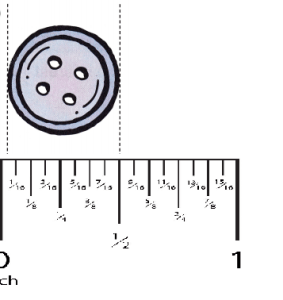
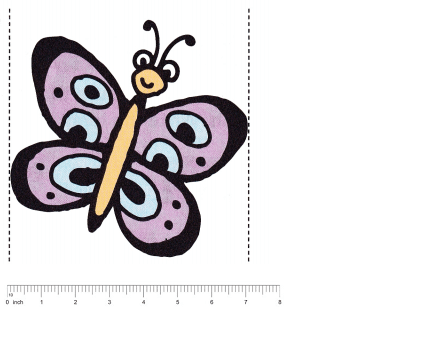
Use a ruler to measure to the nearest \(\frac{1}{2}\) inch. Write the length.

Question 1.
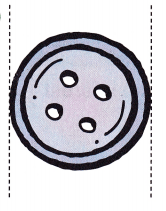
McGraw Hill Math Grade 3 Chapter 10 Lesson 6 Answer Key Using a Ruler to Measure Objects 1
Answer:
McGraw-Hill-Math-Grade-3-Chapter-10-Lesson-6-Answer-Key-Using-a-Ruler-to-Measure-Objects-1
The length of the button is 1/2 inch.

Question 2.
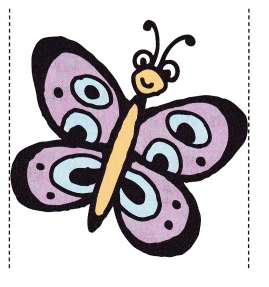
McGraw Hill Math Grade 3 Chapter 10 Lesson 6 Answer Key Using a Ruler to Measure Objects 2
Answer:
McGraw-Hill-Math-Grade-3-Chapter-10-Lesson-6-Answer-Key-Using-a-Ruler-to-Measure-Objects-2
The length of the figure is 7 inches.

McGraw Hill Math Grade 3 Chapter 10 Lesson 6 Answer Key Using a Ruler to Measure Objects Read More »

McGraw Hill Math Grade 3 Chapter 10 Lesson 7 Answer Key Drawing a Line Plot

Excel in your academics by accessing McGraw Hill Math Grade 3 Answer Key PDF Chapter 10 Lesson 7 Drawing a Line Plot existing for free of cost.

McGraw-Hill Math Grade 3 Answer Key Chapter 10 Lesson 7 Drawing a Line Plot

Record

Use a ruler to measure the length of the shapes to the nearest \(\frac{1}{2}\) inch or \(\frac{1}{4}\) inch. Write the lengths.

Question 1.
McGraw Hill Math Grade 3 Chapter 10 Lesson 7 Answer Key Drawing a Line Plot 1
Answer:
McGraw-Hill-Math-Grade-3-Chapter-10-Lesson-7-Answer-Key-Drawing-a-Line-Plot-1
By using the Ruler inch scale we can find the measure of each shape.

Question 2.
Make and use a line plot to show the measurements.
Answer:
McGraw-Hill Math Grade 3 Answer Key Chapter 10 Lesson 7 Drawing a Line Plot_2

McGraw Hill Math Grade 3 Chapter 10 Lesson 7 Answer Key Drawing a Line Plot Read More »

McGraw Hill Math Grade 3 Chapter 10 Lesson 8 Answer Key Problem Solving

Excel in your academics by accessing McGraw Hill Math Grade 3 Answer Key PDF Chapter 10 Lesson 8 Problem Solving existing for free of cost.

McGraw-Hill Math Grade 3 Answer Key Chapter 10 Lesson 8 Problem Solving

Compare

Use the bar graphs above to answer the questions.

Question 1.
Write a statement that compares the number of students taking flute.
Answer:
The same number of students take flute.

Question 2.
Write a statement that compares the numbers of students taking violin.
Answer:

McGraw Hill Math Grade 3 Chapter 10 Lesson 8 Answer Key Problem Solving Read More »

Scroll to Top